


 Many psychologists and psychotherapists use nature in their work. Examples include forest therapy, which uses natural environments to support mental health; environmental psychology, which studies how the environment affects psychological well-being; group therapy in nature, which can help participants feel more relaxed and open; and kinesthetic therapy, which uses movement and physical activity outdoors to work with emotional and psychological states...
Select your language

Articles
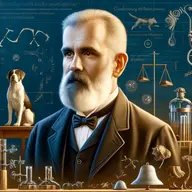 Ivan Petrovich Pavlov, an outstanding Russian physiologist, is best known for his research on conditioned reflexes, which had a major influence on the development of behaviorism — a branch of psychology focused on observable behavior and the role of external stimuli in shaping responses. Pavlov originally studied the digestive system in dogs and received the Nobel Prize in Physiology or Medicine in 1904 for his work in this field. However, his most famous experiments concerned reflex responses and, in particular, the phenomenon of the conditioned reflex...
 Christmas as a holiday did not originate with one particular person but developed within the Christian tradition. It is a Christian celebration commemorating the birth of Jesus Christ. Its establishment is connected with the history of the Church, and Christmas was first celebrated in Rome in 336 AD. Traditionally, December 25 was chosen as the date for celebrating Christ’s birth, although the exact date of his birth is unknown. The holiday later spread throughout the Christian world. Before Christmas became a Christian celebration, various cultures already held festivals in late December associated with the winter solstice, such as the Roman Saturnalia and the Scandinavian Yule...
 Using psychology in advertising is a powerful tool for influencing consumer behavior and shaping preferences. Psychology is applied in advertising in many ways: through emotions (happiness, sadness, fear, nostalgia, and others), social proof or following the example of others, identification and association with particular brands, the scarcity effect, cognitive biases (for example, the “anchoring effect,” when consumers are first shown a high price and then offered a discount), color and visual design, and the use of narratives to make advertising more engaging and memorable. By applying basic psychological principles, advertisers can communicate their messages to the target audience more effectively and increase conversion rates...
 The psychology of colors is a field that studies how color influences human perception, emotions, and behavior. Colors can evoke different associations and emotional responses, which vary depending on cultural context and personal experience. Here are several key points: Main colors and their meanings: Red: Associated with energy, passion, danger, and intense emotions. It may increase arousal. Blue: Symbolizes calmness, reliability, and trust. It is often used in offices to create a relaxing atmosphere. Green: Represents nature, harmony, and growth. It is considered a calming color...
 In antiquity and the Middle Ages, there were people who performed some functions similar to those of modern psychologists and psychotherapists, although their understanding of psychology differed greatly from ours today. They worked within the knowledge and religious-philosophical ideas of their time. Here are several examples: Philosophers and sages — thinkers such as Socrates, Plato, and Aristotle in Ancient Greece explored questions of the soul and consciousness, studying human nature and motivation. Religious leaders — priests, monks, and spiritual mentors played an important role in supporting people’s spiritual and emotional well-being. In Buddhism, for example, monks offered methods of meditation and contemplation to achieve inner calm. Physicians and healers — Hippocrates, Galen, and their followers in Ancient Rome and the Middle Ages believed that mental health was connected with the balance of bodily “humors” and that imbalance could cause illness, including mental disorders...
 Carl Gustav Jung (1875–1961), a student of Freud, founded analytical psychology, expanding the theory of the unconscious. He introduced the ideas of the collective unconscious and archetypes such as the “shadow,” “anima,” and “animus.” Jung also developed the theory of individuation, a process of self-knowledge and integration of different parts of the personality. These ideas became the foundation of analytical psychology and had a major influence on various schools of psychotherapy, philosophy, and culture.
 Psychology can provide significant help in organizing elections by offering insight into how to attract and hold an audience’s attention and influence their opinions and behavior. It helps to better understand voters, their needs, and their motivations. This makes it possible to create persuasive messages, communicate ideas effectively, and build an emotional connection with the audience. Psychological approaches can help make a campaign more focused and successful.
 Psychologists and psychotherapists work with phobias using a range of evidence-based methods that help clients overcome fear or significantly reduce its intensity. A phobia is an irrational and excessive fear of a particular object, situation, or activity that can seriously restrict a person’s life. Why is it important to work with phobias? Working with phobias is important because they can significantly limit a person’s life, creating obstacles in everyday activities and interfering with personal growth...