



Psychology can provide significant help in organizing elections by offering insight into how to attract and hold an audience’s attention and influence their opinions and behavior. It helps to better understand voters, their needs, and their motivations. This makes it possible to create persuasive messages, communicate ideas effectively, and build an emotional connection with the audience. Psychological approaches can help make a campaign more focused and successful.
Key Aspects
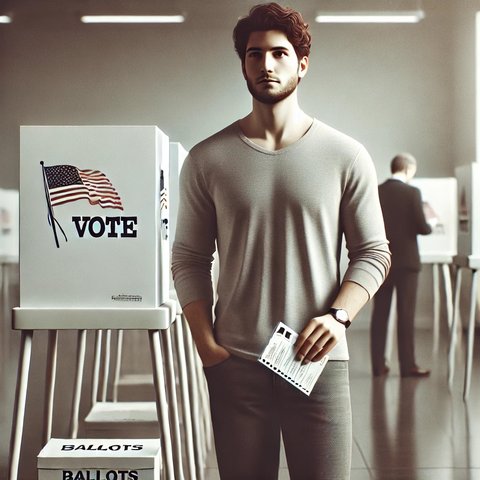 Here are several key areas in which psychological approaches can be useful:
1. Analysis of the target audience
Psychology makes it possible to better understand the motivations, needs, and interests of different groups of voters. This helps create more precise audience segments and address each of them with relevant messages.
2. Development of effective messages
Communication psychology helps formulate ideas so that they evoke an emotional response. People tend to remember messages that stir feelings, whether hope, pride, or even fear. Choosing the right emotional tone and wording can strengthen the impact of a message.
3. Use of persuasion principles
Persuasion methods developed in social psychology, such as authority, liking, social proof, and scarcity, can help build trust and shape opinions. For example, if well-known people or experts support a candidate, this may increase voters’ trust in that candidate.
4. Effective use of visual content
Psychological principles of perception can help in the design of visual materials — posters, billboards, videos, and so on. Color associations, clarity, and memorability are important so that visual content attracts attention and is easy to remember.
5. Psychology of influence through social media
Social media requires a special approach: it is important to consider how people perceive information in these environments. The use of "viral" content, interactive elements, and even memes can attract younger voters and create a sense of involvement.
6. Developing a campaign structure focused on personal needs
Psychology can help account for how voters cognitively perceive information. For example, by considering the principle of cognitive load, the amount of information can be paced to avoid overload and audience fatigue.
7. Analysis and management of stress within the team
Psychology is important not only for interacting with voters but also for organizing the work of the campaign team itself. Understanding group dynamics, emotional intelligence, and stress-management methods helps build a cohesive team capable of coping with the pressure of an election campaign.
Together, these approaches make it possible to build a more coherent, persuasive, and effective election-campaign strategy based on scientific findings about how people perceive, remember, and respond to information.
Scholars’ Contributions to Election Psychology
In election psychology (or political psychology), prominent scholars have made significant contributions to understanding voter behavior, manipulation of public opinion, and influences on political preferences. Here are some of the key figures:
Philip Zimbardo, best known for the Stanford Prison Experiment, studied social influence and how groups and authority can affect individual behavior. His work helps explain how group pressure, the media, and authority figures can influence political preferences and voting.
Solomon Asch is known for his research on conformity, showing that people often adjust to the majority opinion even in simple situations. This has been reflected in political psychology, especially in studies of how people yield to group pressure, including family and social circles, and how they decide to support one candidate or another.
Harold Lasswell is considered one of the founders of political psychology. He studied propaganda and communication, examining how particular images and phrases influence public perceptions of politicians. His concept of "content analysis" is used to analyze political messages and identify underlying psychological motives.
Philip Converse contributed to understanding political behavior by studying voters’ cognitive maps and the stability of political attitudes. His work helps explain why some people retain particular political preferences while others change their views more readily under the influence of events or campaigns.
Daniel Kahneman and Amos Tversky, the former of whom received the Nobel Memorial Prize in Economic Sciences in 2002, contributed through their research on cognitive biases and prospect theory. Their work helps explain how voters perceive risk and how they may be susceptible to manipulation when choosing candidates or political programs depending on how information is presented.
Stanley Milgram is known for his experiments on obedience to authority. His research shows how people may support leaders or political movements that seem to contradict their moral principles if they perceive those leaders or movements as authoritative.
Muzafer Sherif studied group conflict and examined how competition between groups can intensify hostility and polarization. His work is useful for understanding how election campaigns can increase confrontation between political parties and social groups.
John Bargh studied unconscious perception and priming (cognitive pre-activation), demonstrating how subtle influences can affect elections and political preferences. His findings help explain covert methods of influence that are often used in political advertising.
These scholars and their work provide a basis for understanding the psychological processes that affect elections and political behavior. They help campaign developers and political strategists use research-based methods to increase the effectiveness of their influence on voters.
Philip Zimbardo’s Experiment
The Stanford Prison Experiment, conducted by psychologist Philip Zimbardo in 1971, became one of the most famous and controversial experiments in the history of psychology. It was designed to study how social roles and structures of authority influence human behavior. The experiment led to significant findings but also drew criticism because of ethical problems. Here is how it was conducted and what it ultimately showed.
The aim of the study was to find out how people behave when strict social roles are imposed on them — in this case, those of "prisoners" and "guards." Zimbardo wanted to understand how these roles affect personality, behavior, and, in particular, tendencies toward aggression and submission.
The course of the experiment
Twenty-four volunteers were selected — students who were healthy and psychologically stable and had no criminal record. They were randomly divided into two groups: "guards" and "prisoners."
A basement area at Stanford University was converted into a prison. The "prisoners" were placed in cells and isolated from the outside world for the duration of the experiment.
The prisoners were given uniforms and assigned numbers that were used instead of their names to intensify the sense of depersonalization. The guards wore uniforms and dark glasses (to conceal their eyes and create distance) and were given batons. They were also instructed that they could use moderate punishments to maintain order.
Soon after the experiment began, the guards started behaving aggressively toward the prisoners. They devised increasingly harsh punishments and attempted to break the prisoners psychologically. The prisoners, in turn, began to show signs of severe stress and depression and even started losing their sense of reality.
Over time, the guards began to use harsher methods. For example, they woke prisoners in the middle of the night for "roll calls," forced them to perform humiliating tasks, restricted access to toilets, and even withheld food. Some prisoners began to rebel, but this only intensified the guards’ harshness.
The prisoners experienced acute emotional distress. Some were so traumatized that they had to be released early. At the same time, many guards became increasingly despotic and cruel, as if they had fully adapted to their role.
The experiment was originally supposed to last two weeks but was stopped on the sixth day (after five days), when Zimbardo finally realized how severely the participants were suffering. The decision to end the experiment was made after the intervention of his colleague, psychologist Christina Maslach, who pointed out its destructive consequences.
Results and conclusions
The experiment demonstrated that:
- People can quickly adopt social roles and follow them even at the expense of their moral standards.
- When people are divided into positions of "authority" and "submission," there is a tendency toward dehumanization and abuse of power.
- Situational factors such as role and environment can have a much stronger influence on a person’s behavior than individual personality traits.
Ethics and criticism
The experiment was seriously criticized for ethical violations:
- Participants were subjected to emotional and psychological abuse, which caused lasting consequences for many of them.
- Zimbardo himself acted as prison superintendent and became so involved in the process that he failed to stop the experiment in time, overlooking the participants’ suffering.
The Stanford experiment later became an important example of how research should not be conducted. It is studied as a classic but flawed example of an experiment in which social roles and situations influence human behavior. The case also contributed to the adoption of stricter ethical standards in psychological experiments, including the requirement for approval by institutional ethics committees.
Psychology and the 2024 U.S. Presidential Election
Psychology played an important role in the U.S. presidential election, especially in the 2024 campaign, in which the candidates actively used psychological strategies to influence voters.
1. Shaping the candidates’ image
Kamala Harris and Donald Trump sought to create images that would inspire trust and sympathy. Harris emphasized her experience and commitment to social issues, while Trump emphasized decisiveness and economic achievements. These images were shaped with the psychological preferences of the target audience in mind.
2. Emotional influence
Both campaigns used emotional messages to mobilize voters. Harris appealed to hope and unity, while Trump often used rhetoric that evoked a sense of threat or patriotism. Emotions played an important role in voters’ decision-making.
3. Social proof and group influence
The candidates sought endorsements from well-known individuals and organizations to strengthen their legitimacy. Support from authoritative figures generally acts as social proof that can influence voters’ opinions.
4. Use of cognitive biases
The campaigns took into account people’s tendency to seek confirmation of their beliefs and avoid conflicting information. This appeared in targeted advertising and messages that reinforced voters’ existing views.
5. Influence of the media and social networks
Social media became a major channel of communication, where psychological techniques such as creating viral content and using memes helped attract attention and shape public opinion.
6. Psychology of fear and security
Security issues, including immigration and foreign policy, were actively used to evoke feelings of fear or confidence, which clearly affected voter preferences.
Thus, psychological strategies became an integral part of election campaigns aimed at understanding and influencing voter behavior in 2024.
Team Organization
 To organize a psychological strategy in an election campaign, specialists in political psychology, sociology, marketing, and public relations are usually involved. The main participants in such psychological teams include:
1. Political strategists and specialists in political psychology
They develop strategies for influencing different groups of voters, analyze their values and preferences, and formulate key messages.
2. Sociologists and analysts
These specialists study demographic data, examine voter opinion, and track changes in public opinion. They help determine which issues are most relevant to the target audience.
3. PR managers and communications specialists
Their task is to create a positive image of the candidate, interact with the media, and manage public perception.
4. Copywriters and creative specialists
They formulate texts, create slogans and visual materials that appeal emotionally to voters and make the candidate’s message memorable.
Psychological teams are formed so that each specialist is responsible for a particular area while working closely with other team members. This makes it possible to develop a comprehensive approach that takes into account both the strategic and tactical aspects of the campaign.