



AUTHOR-COMPILER
Razorenova E.A. — educational psychologist
State Educational Institution of Secondary Vocational Education of the City of Moscow
College of Automation
and Information Technologies No. 20
2012
The session presented here can be conducted as a stand-alone meeting if the facilitator (a psychologist or teacher) has, for example, the task of bringing adolescents' habitual ways of behaving in conflict situations into conscious awareness. It can also be included in a series of meetings devoted to conflict-free (or assertive) behavior — in that case, preferably at the early stages of the series, so that participants receive rich material for further work and discussion.
The session program is based on the methodology of psychological training and therefore requires a few brief comments.
First, let us clarify that when we speak of training as a methodology or approach, in this case we rely on the definition given by I. V. Vachkov: “...group psychological training is a set of active methods of practical psychology used to develop skills of self-knowledge and self-development” (I. V. Vachkov, “Fundamentals of Group Training Technology. Psychotechniques,” 2000, p. 21).
When beginning to implement this program in practice, it should be remembered that the use of training technology presupposes compliance with a number of conditions:
- a certain structuring of the material during the meeting;
- the establishment and mandatory use of a set of rules that regulate the life of the group for the duration of the session;
- a special format of relations between group members and the facilitator, in which the main factor of success is not even the subject-to-subject approach, as is often assumed...
One of the key factors in the success of training as an approach is meeting the high demands it places on the facilitator’s personality. The essence of these demands is that the facilitator should possess a rich range of behavioral patterns, high psychological flexibility, and situational mobility in order to respond to developments during such sessions in a timely and appropriate manner. These qualities ensure “complementarity,” that is, an accurate fit between the facilitator (trainer) and the group.
Descriptions of how the proposed working technology can be implemented in practice can be found in numerous manuals on training programs written by such well-known authors as N. Yu. Khryashcheva, E. V. Sidorenko, S. I. Makshanov, A. S. Prutchenkov, and many others.
The objectives of this material are more modest. Perhaps two main ones can be identified: to give the reader a specific tool that can be used in professional practice, and to draw the practitioner’s attention to as many nuances and possibilities of this tool as possible.
So, to the main point.
The aim of this session is to identify and bring into adolescents’ awareness their characteristic stereotypes of behavior in conflict situations.
Objectives:
- to focus participants’ attention on their characteristic cognitive and behavioral attitudes;
- to form an understanding of themselves in a conflict situation based on feedback from the group;
- to identify behavioral patterns in order to determine ways of correcting them further.
The session is designed for two academic hours with a group of 12 to 18 people aged 15 and older. The upper age limit is determined mainly by the working conditions in each particular case. However, it can be stated at once that if group members are willing to participate, age itself is not an obstacle. It is preferable not to conduct these exercises with younger participants, because around the age of 15 an adolescent in modern society has already accumulated sufficient experience of varied social interaction and, to a certain extent, has “matured” for self-analysis of personality and actions.
Like most sessions, the one proposed here follows a traditional structure and includes four main components:
- introductory part;
- warm-up;
- main part;
- conclusion.
Materials and equipment:
- name badges with blank/prewritten participant names (if needed);
- A4 paper — at least 2 sheets per participant;
- oil pastels — preferably 2 sets of 48 colors or at least 3 sets of 12 colors for a group of 12 people;
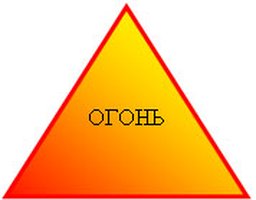
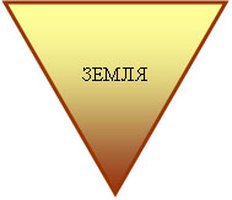
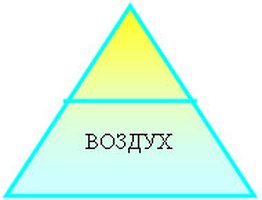
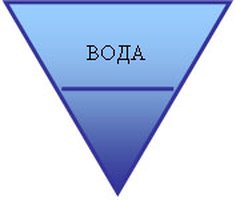
- prepared “Elements” signs — A4 sheets with symbolic drawings of the four basic elements: fire, water, air, earth (see Appendix and Exercise 2.1);
- a sheet with unfinished sentences (see Appendix);
- individual clipboards for each participant, on which an A4 sheet can be attached, or a specially arranged room with a table area suitable for drawing.
CONTENT OF THE DEVELOPMENTAL SESSION
- Introductory part (5 minutes)
Objectives: entering the situation, focusing all participants’ attention on what is happening, based on the “here and now” rule.
The facilitator and participants take their seats (preferably in a circle) and greet one another. For ease of communication, participants may now write their names on badges or take prepared name badges. The facilitator states the aim of the meeting: “Today we will think about what conflict means for each of us, how we relate to it and experience it... And we will also try to look at ourselves in conflict through another person’s eyes.”
The facilitator should also remind participants (or present for the first time, if this is the first/only meeting) of a number of group-work rules, three of which are especially important for this session:
- Each group member speaks only in the first person (“I-statements”) and only in a form that is respectful toward the other participants. For example: “I feel sad (hurt, etc.) when you say that” instead of “You make me sad (hurt me) when you say that.”
- All statements should concern only events and words that occurred or were spoken during the session and should not refer to events that happened in the past or may happen in the future.
- During discussions and exchanges of impressions, participants refrain from directly evaluating a person’s personality (appearance, character, worldview) and focus their statements primarily on specific behavioral reactions or on products of activity (drawings, texts, etc.) created during the session.
- Warm-up.
- Four Elements (10–12 minutes)
Objectives: assessment of participants’ current emotional state; identification of emotional resources; activation of the meeting topic in the group’s awareness.
The room in which the session takes place is conventionally divided into 4 parts (for example, the corners of the room), each corresponding to one of the elements: fire, water, earth, air. Each element can be marked with a conventional symbol — an A4 drawing, for example: a bonfire; a river/lake/drop; a hill/handful of earth; a cloud/wind.
The adolescents are invited to close their eyes for 1–2 minutes and, focusing on their inner sensations, feel which part of the room — which element — would be most comfortable for them at that moment, and which element would currently be a resource for them — supporting them, giving energy, strength, etc. For another two minutes they may walk around the room, listening to their sensations in its different areas, in order to find the most comfortable zone (element) and remain there (1 minute). The facilitator asks them to pay attention to their inner experiences and monitor bodily sensations: “Please notice how you are breathing in the element you chose. Is it easy? Calm?.. How do your muscles feel: relaxed or tense? What do you feel like doing?.. What thoughts come to mind right now?..”
Participants may, if they wish, accompany their movement around the room and their stay in the chosen element with additional movements or sounds (they may imitate flying, the rustling of water, etc.). However, the exercise itself is conducted WITHOUT ANY MUSICAL ACCOMPANIMENT.
Then, once everyone has found their element, they are asked the following question: if they imagine that they are currently in conflict with someone or have just had an argument, which element would they choose then? For another two minutes the adolescents move around the room again (if they feel the need) and find the element they most resemble when in conflict.
After everyone has made a choice, volunteers in the groups are invited to speak: to share how it feels to be in that element and explain in one or two sentences why they think they behave like “fire” or “water,” etc., in conflict. About 5 minutes may be allotted for discussion.
After everyone who wishes to speak has done so, the group returns to their chairs (back to the circle).
The facilitator moves on to the next exercise.
- Unfinished Sentences (10–15 minutes for the sentences and about 7 minutes for discussion)
Objectives: assessment of habitual cognitive and behavioral attitudes of group members; immersion in the topic of the meeting.
The facilitator takes a set of unfinished phrases prepared in advance (independently or from those provided in the Appendix below) on the general topic of human behavior in conflict situations. The instruction to the group is: “I will now say unfinished sentences whose meaning reflects different aspects of our behavior and experiences in conflict. I will name a person and then say the first part of a phrase, and the person I address should finish it as if speaking about themselves. I remind you that here, as in tests, any answer is correct, and our main task now is to explore what feelings, thoughts, and actions people may have in conflicts.”
If the facilitator prepares the set of unfinished phrases independently or wishes to add to the proposed ones, the following should be taken into account: it is desirable for the phrases to refer not only to the activity component of attitudes (for example, items 6 or 17 in the Appendix), but also to the emotional component (for example, 9, 10) and the cognitive component (for example, phrases 7, 15). This will make it possible not only to reveal the range of reactions in conflict more vividly, but also to consider conflict from different angles and obtain more information for discussion.
Depending on the size of the group, 2–3 full rounds of the exercise can be completed, with each participant finishing 2–3 different sentences. During the exercise, the facilitator should take the following into account:
- If there is an additional task of assessing the group’s reaction to a particular situation (possibly a conflict that actually occurred), one to three unfinished sentences indirectly describing the situation can be selected and given to every group member, thereby clarifying their attitude toward what happened.
- If the aim is to reveal as many stereotypes of conflict behavior as possible, the unfinished sentences offered should be made as varied as possible, describing conflict as a phenomenon from many sides.
- If the facilitator’s internal tasks during the exercise include some differentiation within the group by styles of behavior and/or reaction, several identical phrases can also be selected and offered for completion to every group member.
In all the cases listed above, however, the facilitator must remember these additional tasks during the discussion stage of the exercise and should therefore draw the group’s attention to them, specifically noting observations or summarizing these additional diagnostic aspects of the work.
In general, the discussion of this exercise is best conducted with emphasis on what assumptions can be made about strategies of behavior in conflict. Group members should be encouraged to analyze the statements they heard and try to classify the information in some way.
It is useful to compare group members’ statements with the element associations they presented in the previous exercise: ask whether, in their view, their associative image of themselves coincides with the cognitive patterns or, conversely, spontaneous reactions they demonstrated while working with the sentences.
- Main part.
“What Am I Like in Conflict?..” (projective drawing technique) (40 minutes).
Objectives: forming and adjusting one’s image of oneself in a conflict situation based on group feedback; awareness and identification of individual stylistic characteristics of behavior in conflict.
Participants are either given individual clipboards with A4 sheets attached so they can draw comfortably while sitting in a circle, or, if the room allows, they take places at tables that preferably also form some kind of closed perimeter shape (circle, square, etc.).
Oil pastels are the most convenient material for this exercise because they are soft and flexible to work with, provide a broad color palette, and make drawing technically easy. For a group of 12, it is desirable to have AT LEAST 3 sets of 12-color pastels so that participants have sufficient freedom of choice according to their preferences (there may be two or three people in the group who associate themselves with black, red, or yellow in conflict).
The facilitator gives the group the following instruction: “Each participant now chooses one pastel crayon, preferably one that somehow reflects a color association with their own behavior in conflict. Then, on the sheet of paper each of you has, you will have two minutes to begin a drawing on the theme ‘This Is Me in Conflict.’ Mark or sign your drawings in some way so that you can recognize your own drawing later. After these two minutes, at my signal, you pass the drawing to the person on your left. Each of you will then have exactly 1 minute to try to understand the author’s idea and continue the drawing with your own crayon. It is helpful if you have seen this person in a conflict; then you can try to add your symbolic vision to the drawing they started. If you have never seen the author in conflict, simply try to grasp their sense of self and continue the drawing in the way that seems right to you. Our work ends when the drawings return to the people who began them.”
During the exercise, it is preferable that participants do not talk. There are no strict time limits for the technique, but it should be remembered that if the author works on the drawing for more than 2 minutes, it becomes sufficiently complete that it will be difficult for others to continue it. Likewise, allowing other participants more than 1 minute to add to the drawing makes the work less interesting because it reduces the dynamics of the group.
The time may be shortened: for example, the author may work on their drawing for 30 seconds, but not less. Each subsequent participant may receive the drawing for at least 15 seconds. It is important to maintain the time proportion so that the drawing initially contains the author’s style and at least the broad outlines of the author’s personality can emerge.
As follows from the instructions, this exercise is based on the technique of completing drawings and therefore carries a powerful energetic charge of group projections onto each member of the group. It is this feedback from the group, which each participant receives at the end of the exercise in the form of a drawing, that stimulates further discussion and further reflection about themselves.
In this case, the drawing as “objectified projections” serves several purposes:
- it provokes curiosity, which in turn motivates group members to participate in the work;
- it stimulates communication within the group because it often requires explanations, clarifications, and additions that the author wants to hear;
- because the finished drawing often changes substantially compared with the original idea, it gives the author a large amount of information, sometimes even through the mechanism of cognitive dissonance: when one’s own ideas and wishes diverge from, or even conflict with, the way others see them.
After participants have examined the drawings they receive, they can be invited to show the group the finished drawing (without insisting; participation is voluntary), and the exercise should be discussed. A sample list of questions for discussion may be as follows:
- What did you enjoy more: continuing your “colleagues’” drawings, or drawing and now examining your own?
- What emotions, feelings, and experiences does the drawing that returned to you evoke now?
- How different from, or similar to, your original idea is it?
- To what extent could the resulting image actually be a metaphor for your behavior and feelings in a conflict situation?
- What do you like and dislike about the drawing?
- What do you feel like doing with the drawing now?
- Would you like to say anything to those who drew for you, or to anyone whose drawing you worked on?
- Is there anyone who strongly dislikes their drawing, rejects it, and experiences only negative feelings toward it?
- What conclusions do you think you can draw for yourself from the drawings you received?
If during the discussion it becomes clear that some people strongly dislike their drawing and find it unpleasant, several minutes should be devoted to them. It is best to ask them to express their feelings, carefully ensuring that their statements are nonjudgmental toward other participants and remain respectful. Then try to find out whether these people need any support at the moment and, if so, from whom: the whole group, the facilitator, or individual group members?..
It may happen that one or two of these participants, if there are several, refuse to discuss anything in the group at all. In that case, at this stage they should be left alone, and after the session they can be invited to stay and talk privately for a while.
In such situations, the facilitator’s main task is not to restore the participants’ emotional balance, and still less to ensure that they feel positively at that very moment, but to create a sense that their experiences have been noticed and accepted, that is, that they have a “right to exist” and are entirely normal experiences: we do not always like what we learn in life, including what we learn about ourselves...
- Final part. (10 minutes)
“Drawing Your Current State”
Objectives: psychological completion of the meeting for each group member; summarizing the topic of individual stylistic characteristics of behavior in conflict situations; additional assessment of group members’ emotional state.
Instruction to the group: “Our meeting is coming to an end. We have literally about 10 minutes left. Each of you will now receive a sheet of paper and look at our sets of pastel crayons: if possible, choose the colors that at this moment you associate with your own emotional state.”
Participants take paper and choose crayons. When everyone is ready, the facilitator continues: “Now I suggest that for one minute (I will keep track of the time) you sit with your eyes closed, listen to your thoughts and bodily sensations, and try to ‘catch’ an image that can associatively convey to others what you are feeling right now. As soon as the image becomes clear enough and ready to be embodied, please draw it on the sheet each of you is holding. No more than one minute will also be allotted for the drawing.
If there are no questions, I invite you to close your eyes and begin searching for the image.”
After the drawings are completed, participants show the resulting images to the group. The facilitator may invite volunteers to comment on their drawings or add any other information related to the session that has just taken place.
Because this is the concluding stage, it is especially important to be responsive to the group and to participants’ wishes. All statements at this stage should be entirely voluntary and initiated by the group members themselves.
If the meeting was productive, it is quite possible that many participants received a very large amount of information that is still difficult for them to assess and process.
To encourage group members to speak, the facilitator may ask prompting questions:
- What was the most important thing for you in today’s meeting?
- What part of the meeting was the most pleasant for you?
- Was there at least something in today’s meeting for which you could say “thank you” to the participants or the facilitator?
- What do you think you will reflect on most when you remember this meeting?
- How does your body feel right now?.. If its sensations could speak, what might it say about the meeting that has just taken place?
After everyone who wishes to speak has done so, the facilitator may thank participants for their work, perhaps express wishes to the group, and announce that the meeting is over.
Notes in the Margins
Because group work in a training format is complex and highly dynamic, the meeting may fail to produce the expected result: participants may not become properly engaged, and there may be insufficient trust and openness in the group. The work — both drawings and statements — may become formal and superficial.
In such a situation, the facilitator’s main task will be to cope with the naturally emerging anxiety and perhaps even fear. The basis of the facilitator’s anxiety here is fear of losing control over the course of the meeting and the development of group dynamics — essentially, fear of losing control over the situation.
The next stage or wave of anxiety may concern the facilitator’s own personality: in the facilitator’s own eyes, losing control of the situation may mean insufficient professional skill — simply put, incompetence — which at that moment may become visible to the group members.
An attempt to suppress the growing negative emotions will most likely only worsen the situation, because the energy required to suppress emotions may be almost greater than the energy generated by the emotions themselves. All this energy, which could otherwise participate in and support the group dynamics and the facilitator, will instead inhibit the facilitator’s intellectual and motor activity.
Therefore, when the proposed program is proceeding only formally, one successful way to overcome the formality of interaction and “break the ice” may be for the facilitator to openly show their emotions and reflect aloud on what is happening. Such a step certainly requires personal readiness and courage. But openly presenting oneself, especially among adolescents and young people, inspires respect.
Moreover, at an automatic level this may activate in some participants a mechanism of “following authority,” represented here by an adult with a certain social status and life experience.
Other mechanisms that sometimes work in such situations are imitation and provocation. The first — imitation — follows the influence of authority but differs from it in that individual group members see a different style of behavior, one that differs from what is generally accepted. Following it gives them an opportunity to stand out in the group and be “not like everyone else.” The very fact that someone demonstrates such behavior shows that it has a right to exist and is not so frightening.
The second mechanism — provocation — may work among participants who are in a state of situational protest but are generally interested and ready to think, which is exactly what this session requires of them. As a rule, these are overt or covert leaders in the group whose relationships with one another, with authority, and with authorities external to the group (which includes the facilitator) have not yet been fully clarified. To involve such participants in the work, the facilitator may first share with the whole group their own emotions about what is happening and then ask targeted questions specifically to these participants, provoking them to express their point of view.
An initially formal attitude toward the meeting is perhaps the only situation in which evaluative judgments about what is happening in the group during a training session are permissible. Even then, however, such evaluations must remain within strict limits:
- in terms of content, evaluations may concern only events, statements, and actions taking place in the group at the present moment.
- In form, such an evaluation must include a description of the personal emotional state that arises in response to what is happening, together with an attempt at analysis — a search for the reasons for what is happening and for the actions of the group as a whole (without referring to the actions of particular participants).
- In terms of whom it addresses, the evaluation may concern only the group as a whole and the participant’s own actions and feelings. As throughout training work, evaluation of another person’s personality, emotions, or reflections is excluded.
For example, if initiated by the facilitator, such an evaluation might sound like this: “For the last 10–15 minutes that we have been working together, I have had a growing feeling of anxiety. I may be mistaken, and what I feel may have nothing to do with the group. But it seems to me that many of us are uncomfortable here. I think there may be different reasons for this... For me, for example, it is a sense of constraint, perhaps even a lack of sincerity in what is happening. Right now we have an opportunity to change this. But that will require joint effort and your help. Are there other participants in the group whose feelings are similar to mine? Is there anyone who is ready, as I am, to share their feelings with the group? To discuss what you think is happening to us right now and why?”
It is important for the facilitator to monitor what they say, because the success of the group’s subsequent work is at stake at this moment. Their words and manner of speaking should sound calm and confident and — despite their evaluative nature — give the impression of an invitation to dialogue, a hypothesis rather than a statement of fact.
If the facilitator succeeds in drawing the group into a discussion of what is happening and at some stage the participants become actively involved, the remaining part of the program can be “sacrificed” in favor of the developing dialogue, because a detailed and emotional discussion of the current situation may be more useful to the participants. They will be able to observe directly a conflict-resolution situation and different behavioral strategies, which can also become material for analysis during the meeting itself.
If the meeting nevertheless develops according to the intended scenario, the facilitator may have a number of different questions.
- What should be done with the drawings participants make during the session? The answer depends on several additional conditions.
- If the meeting is a one-time session, the drawings can be given to those who wish to take them, after first asking what they intend to do with them. It is preferable to find a reasoned basis not to return a drawing to an author who says they want to destroy it because they dislike it. This may mean that the drawing symbolizes something in the author’s personality that they do not accept, and destroying it may therefore only lead to displacement and suppression of unpleasant experiences.
- If the meeting was conducted with the aim of obtaining additional diagnostic information, it is preferable not to give the drawings back, because they contain a fairly large amount of information. When planning further individual work, they can be used both as a motivational factor for inviting the authors to a conversation and as diagnostic material from which to build a plan for further corrective measures or formulate hypotheses and strategies in counseling work.
- If the meeting is only one episode in a long-term program, it is best to agree with participants before work begins about how and where the products of individual and group work will be stored. Two options are probably most appropriate: either each participant keeps all their individual work and undertakes to preserve it intact until the end of the training program, or all works — products of participants’ creativity — are marked in some way (signed) and kept by the group facilitator until the program ends. At the end, those who wish may take their works back, all or only some of them.
Group works (group collages, drawings, small installations, etc.), if created within a long-term program, are best kept by the group facilitator at least until the group’s work is completed. In that case, the final meeting can include a special ritual of “farewell,” “giving,” or “letting go” of the jointly created works, which becomes an additional “psychological full stop” at the end of the completed program.
- Can the drawings be used for some other purpose (for example, as illustrations in work with another group or another person), especially if their artistic quality happens to be very high?
According to the position accepted in the art-therapy approach, any product created by a person during individual or group work bears the imprint of the author’s personality. Therefore, a creative product may be used for any purpose other than work with its own author only with the creator’s permission.
The facilitator may think of organizing a thematic exhibition of the visual works or using individual drawings on a themed display. For these and similar purposes, the facilitator must ask the authors of the drawings in question for permission to use their work further and explain why the permission is being requested.
- What should be done if the facilitator experiences unpleasant emotions when looking at a drawing — if the drawing is frightening, irritating, or saddening?
According to the art-therapy view of the emotional context of any creative work, and taking into account the general principles of organizing and conducting training, in such a situation the facilitator should ask the author about their feelings toward their own creation. It is enough to ask at least two or three questions about what the author feels when looking at the drawing and what they intended to express in it.
If the author relates to the drawing positively or neutrally, we may assume that this is an example of someone else’s images resonating with our own emotional state and experiences. A situation in which the group facilitator suddenly notices negative reactions in themselves toward a particular drawing — both emotional and bodily — provides, first and foremost, a great deal of material for the facilitator’s own professional reflection. It creates the task of finding the causes of this negative reaction and, if necessary, addressing them. Here the creative material of group work becomes material for the facilitator’s self-assessment.
- Participants’ choice of colors and symbols in drawings: what should be done if the drawings look gloomy and depressing?
The general context of the drawings, which we might conventionally call “negative,” even if there are several such drawings in the group, does not justify a conclusion about an unfavorable psychological climate in the group or a negative psychological state of an individual. A drawing is only diagnostic material that provides grounds for a number of hypotheses. Each hypothesis must subsequently be explored through a conversation about the drawing. By asking projective, open-ended, and semantically varied questions, a specialist — preferably a psychologist — can clarify, confirm, or refute some initial hypotheses.
Even this, however, is not enough to reach an unambiguous conclusion. If doubts or concerns about psychological or mental well-being remain, it is advisable to conduct additional assessment using specialized, reliable test instruments and possibly seek assistance from related professionals.
- What should be done if participants ask for the drawings to be interpreted — to be told what they mean or to hear the facilitator’s opinion of them?
Like several other areas of psychological theory and practice, art therapy does not encourage the use of interpretation as a working method. When a group makes such requests, the following course of action is most appropriate for the facilitator:
- Explain to participants that, except in rare cases, interpretation is excluded from techniques for working with drawings, especially the kind of superficial interpretation that would be possible under the present conditions.
- Offer participants not an interpretation but the facilitator’s personal, subjective view of the drawings presented. In that case, the facilitator is essentially giving individual feedback to each participant about their drawing. As with any feedback in training, it is preferable for it to be nonjudgmental, emotionally and imaginatively rich, logically complete, and respectful.
Such behavior by the facilitator will once again demonstrate a willingness to engage and cooperate and may also increase the group’s motivation both for more serious work during the meeting and for deeper reflection on what happened beyond the training session.
- Should the facilitator take part in the exercises together with the group?
The answer to this question also depends largely on the situation in which the training takes place and on the facilitator’s experience. If participants are sufficiently interested and the facilitator has their own training and diagnostic tasks, they can remain outside the game process itself and primarily perform the roles of facilitator and observer.
If, however, the group is characterized by low or unstable motivation, high anxiety, a formal communication style, and, for example, a rigid hierarchical structure, it is more appropriate for the facilitator to participate in the exercises alongside the group. It is especially important in such a group to take part in discussions, not only by asking questions competently but also by demonstrating through personal example how and about what positive feedback can be expressed appropriately.
Appendix 1
OPTIONS FOR UNFINISHED SENTENCES
- For me, conflict — is...
- When I am insulted, I...
- An insult means to me...
- I would like to say to someone who often gets angry...
- When something hurts or offends me, I would like to say...
- Conflict helps achieve success when...
- When I think about people who often argue, I feel...
- To help people close to me when they argue, I...
- What frightens me most in conflict is...
- What pleases me most in conflict is...
- It is possible to remain calm in conflict because...
- Conflict is bad because...
- Conflict is good because...
- For most people I know, conflict — is...
- I believe that the most important thing in conflict is...
- To avoid conflict, I am willing to...
- I get involved in conflict because...
- After I argue with someone close to me, I feel...
- The best way not to get involved in conflict — is...
- When I argue or have a conflict with someone, other people’s opinions about it...
- I think the easiest way to resolve any conflict is...
- The most frightening conflict for me is...
- I believe the worst thing that can happen as a result of conflict — is...
- To people who argue, I would like to say...
Appendix 2
EXAMPLES OF SYMBOLS FOR THE BASIC ELEMENTS
| 1. FIRE | |
 |
 |
| 2. EARTH | |
 |
 |
| 3. AIR | |
 |
 |
| 4. WATER | |
 |
 |
REFERENCES
- Vachkov I.V. Fundamentals of Group Training Technology. Psychotechniques: Textbook. — 2nd ed., revised and expanded. — Moscow: Os-89 Publishing House, 2000. — 224 pp.
- Makshanov S.I. Psychology of Training: Theory. Methodology. Practice: Monograph. — St. Petersburg: Obrazovanie, 1997. — 238 pp.
- Art Therapy Practicum / Ed. by A. I. Kopytin. — St. Petersburg: Piter, 2001. — 448 pp.
- Prutchenkov A.S. Socio-Psychological Training at School. — 2nd ed., revised and expanded. — Moscow: EKSMO-Press, 2001. — 640 pp.
- Psychogymnastics in Training. Ed. by N.Yu. Khryashcheva. — St. Petersburg: Rech, Training Institute, 2002. — 256 pp.
- Sidorenko E.V. Motivational Training. — St. Petersburg: Rech, 2001. — 234 pp.