



In the history of psychology, there have been several figures who engaged in predicting the future or claimed to possess the ability to see what was coming, although these approaches were not always recognized as scientific.
- Carl Gustav Jung - one of the best-known psychologists, who paid attention not only to consciousness, but also to the collective unconscious, archetypes, and synchronicity. Although Jung did not engage in predicting the future in a direct sense, he was interested in the symbolism of dreams and collective archetypes, which, in his view, could point to the future or to deeper processes in the psyche.
- Edgar Cayce - a famous American mystic and clairvoyant, sometimes called the "Sleeping Prophet". Cayce claimed that he could predict the future and diagnose illnesses while in a trance. Although Cayce was not a psychologist in the traditional sense, his activities often intersected with topics that interest psychologists, such as consciousness and the unconscious.
- Wilhelm Reich - although he did not engage in predicting the future, his work concerned energy-information fields, which are sometimes associated with ideas about prediction and visions.
- Sigmund Freud - although Freud was not known for predictions, his theory of dreams included the idea that dreams could indicate a person's future state or predict their psychological development.
It is worth noting that modern psychologists and scientists approach predictions of the future with considerable caution and skepticism, preferring methods based on empirical evidence and scientific methodology.
Edgar Cayce
 Edgar Cayce, often called the "Sleeping Prophet", became known for his predictions and healing sessions conducted while in a trance. Cayce claimed that, while in a deep hypnotic sleep, he could answer questions about the future, diagnose illnesses, suggest treatments, and even speak about spiritual and philosophical subjects. He was active in the twentieth century and became one of the most mysterious figures in the paranormal community.
How did Cayce predict the future?
Trance state: Cayce entered a state of deep trance while lying in a relaxed position. In this state, his voice was said to change, and he supposedly "connected" with a higher realm of knowledge or the collective unconscious. Cayce would begin speaking in the third person and answer questions posed to him while he was in the trance.
Readings or sessions: The process during which Cayce made his predictions or diagnoses was called a "reading". He claimed that he could access the so-called "Akashic Records" — a metaphysical realm in which all events of the past, present, and future are recorded. Cayce would obtain information, answer questions, and give recommendations ranging from spiritual advice to descriptions of a person's health.
Topics of predictions: Cayce made predictions on a wide range of subjects, from future world events to natural disasters, climate change, spiritual growth, and even the fate of specific individuals. His predictions included:
- Changes in world politics, for example the prediction of the Second World War.
- The future of America and global social change.
- Natural disasters, including earthquakes and floods.
- A shift in the Earth's poles, which, according to him, was supposed to occur in the future.
- Spiritual questions, including rebirth of the soul and reincarnation.
Method of health prediction: Most of Cayce's "readings" concerned health. While in a trance, he supposedly scanned a person's body and gave treatment recommendations involving diet, natural remedies, physical exercise, and lifestyle changes. According to his followers, many of these recommendations proved useful, even though the treatments themselves differed from traditional medical approaches.
How successful were Cayce's predictions?
Cayce gave about 14,000 "readings", and his followers claim that many of them proved accurate or at least partly came true. Here are several cases in which his predictions attracted attention:
Second World War: In 1935, Cayce predicted that the world would soon face a global conflict involving Germany, Japan, and Italy. He said that the war would begin because of a clash of ideologies, and that is what happened.
The 1929 stock market crash: Cayce warned of coming economic turmoil and a stock market collapse long before the beginning of the Great Depression. His predictions on this topic also concerned a future economic crisis that, according to him, could happen again.
The future of medicine: Cayce claimed that medicine would become increasingly focused on prevention, healthy nutrition, and natural treatment methods, which to a significant extent reflects developments in modern healthcare.
Disasters and changes on Earth: Some of Cayce's predictions about the future included global natural disasters, such as earthquakes in the United States and possible flooding of coastal areas. Although these predictions did not fully come true, some of his ideas about climate change and natural disasters are echoed in modern concerns about global warming.
Shifting of the poles: Cayce claimed that in the future the Earth's magnetic poles would begin to shift, affecting climate and geological conditions. Science does confirm that the Earth's magnetic poles can shift, but this process is much slower than Cayce predicted.
Assessing Cayce's predictions
Although many of his predictions came true, such as war and economic crisis, a number of others have not yet been confirmed. His followers believe that Cayce possessed unique abilities associated with "intuitive diagnosis" and "foresight". Skeptics, in turn, argue that many of Cayce's predictions can be explained as successful guesses and sensitivity to broad psychological and social trends.
Cayce's influence on modern culture
Cayce influenced the development not only of parapsychology but also of alternative medicine, spiritual teachings, and esoteric movements. His ideas about intuitive medicine and self-knowledge remain popular among people seeking alternative paths to health and self-understanding. His work also stimulated research in psychology, especially in areas related to the unconscious and the possibilities of intuitive cognition.
Although the accuracy of Cayce's predictions remains controversial, his legacy is significant and continues to inspire followers to explore intuitive and spiritual aspects of life.
Tarot Cards
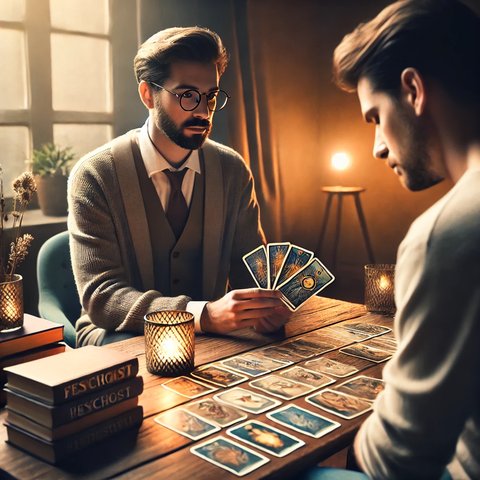 Tarot cards are a deck of 78 cards traditionally used for divination and predicting the future, as well as for personal self-knowledge and spiritual reflection. Tarot is also widely used in esotericism and mysticism. Although Tarot cards are popular in the modern world as a tool for fortune-telling, they were originally developed for a game similar to other card games, but over time acquired mystical and occult meaning.
Structure of the Tarot deck
A Tarot deck consists of two main parts:
Major Arcana (22 cards) — These cards symbolize important life lessons, archetypes, and powerful spiritual energies. Some of the best-known Major Arcana cards include:
- The Fool (the beginning of a journey or a new beginning)
- The Magician (will and control)
- The High Priestess (intuition, mysteries)
- Death (transformation)
- Wheel of Fortune (change and fate)
- The Sun (joy and success)
Minor Arcana (56 cards) — These cards reflect everyday situations, emotions, and energies. They are divided into four suits, each associated with different aspects of life:
- Wands (element of fire, energy, action, creativity)
- Cups (element of water, emotions, feelings, relationships)
- Swords (element of air, intellect, decisions, conflicts)
- Pentacles (element of earth, money, material matters, work)
Each suit consists of cards from Ace to Ten, as well as court cards: Page, Knight, Queen, and King.
Using Tarot
Divination: The most popular use of Tarot is fortune-telling — laying out cards in order to obtain answers to questions or a forecast of the future. This may involve different spreads, such as a three-card spread representing past, present, and future, or more complex ones such as the Celtic Cross.
Self-knowledge: Many people use Tarot as a tool for meditation and reflection. The cards can help explore inner states, recognize hidden emotions and problems, and consider possible paths for further development.
Spiritual practice: In some esoteric traditions, Tarot is used as part of spiritual practice to explore archetypes associated with the personal and collective unconscious and to work with symbols, which resembles psychological approaches such as dream work or work with Jungian archetypes.
History of Tarot cards
Tarot cards appeared in Europe in the fourteenth and fifteenth centuries, probably in Italy. Originally they were used for a game called "tarocchi", but by the eighteenth century they had become associated with mysticism and occultism through the work of authors such as Antoine Court de Gébelin and Éliphas Lévi. Tarot gradually came to be used as a tool for divination and prediction.
Modern Tarot
Today, Tarot is not limited to mysticism and fortune-telling. Many psychologists, including followers of Jungian psychology, use Tarot cards to explore symbols and archetypes as a tool that can assist with self-knowledge and psychotherapy.
Symbolic Tools Used in Psychology
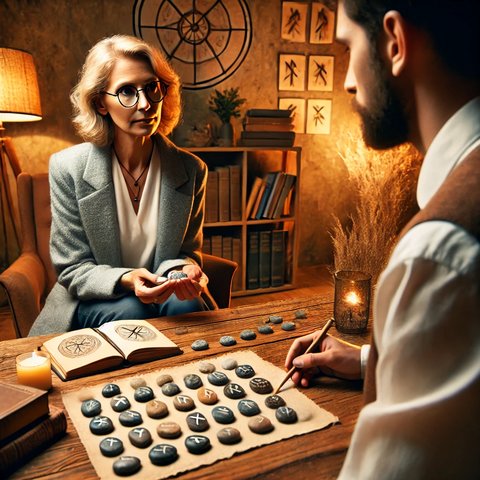 In addition to Tarot cards, there are many other symbolic and projective tools used in psychology, especially in art therapy, Jungian therapy, and other methods focused on working with symbols and the unconscious. Here are some of them:
1. Methods using projective cards:
Associative cards (or metaphorical cards) are sets of cards with images that do not have fixed meanings and are used to stimulate associations, emotions, and storytelling. Well-known sets such as "OH Cards" or "SAGA" help clients work with imagination, symbols, and associations. The cards are often used to explore personal themes, analyze experiences, and resolve conflicts.
Emotion and feeling cards are cards with images symbolizing different emotions or states. Such cards can help when working with children or adults who find it difficult to identify or express their feelings.
2. Sand therapy:
Sand therapy uses miniature figures of people, animals, objects, and natural elements that the client places in a sandbox. This creates a symbolic space in which the client can express inner states and work through difficult emotions and conflicts. Sand therapy is effective with children and adults, especially those who find it difficult to verbalize their experiences.
3. Guided Affective Imagery (or imaginative psychotherapy):
This is a method in which the client is invited to close their eyes and imagine various symbolic images or scenes, such as a tree, meadow, river, or house. Guided Affective Imagery is based on the idea that such images reflect the state of the unconscious and help the client become aware of inner conflicts, needs, and personal resources.
4. Gestalt figures and symbols:
In Gestalt therapy, figures and objects are sometimes used that the client chooses and associates with different aspects of their personality or life. For example, a client may choose a figure that symbolizes their inner child or an object associated with an important stage of life. This helps reveal hidden aspects of the personality and work through inner conflicts.
5. Stones and crystals:
In some forms of therapy, especially those focused on bodily sensations and work with natural materials, stones and crystals are used. They may symbolize inner resources, states, or qualities that a person wants to develop. Stones are often used to create a meditative state or to symbolically express vitality and resilience.
6. Amulets and talismans:
When working with cultural and personal symbols, amulets, jewelry, or objects that have meaning for the client are sometimes used. They may symbolize protection, strength, or important values. For example, during therapy, a client may be invited to choose an object that symbolizes confidence or support, which can help in work on self-esteem and personal resources.
7. Story cubes:
These are dice with images of different objects or actions that are used to create stories. The client rolls the dice and, using the images that appear, creates a story. This method is often used with children to work through fears, anxiety, and hidden feelings in the form of play.
8. Mandala cards and coloring:
Mandalas and coloring activities help with concentration, relaxation, and access to a state of inner harmony. Drawing mandalas is used as a method of meditation and self-reflection in which a person expresses emotions and inner states by creating symmetrical images.
9. Doll therapy:
This method involves working with dolls that symbolize different aspects of the personality, family members, or significant figures. Dolls can be used in family therapy, child therapy, and constellations to work with relationships and inner conflicts.
These tools are united by their use of symbols and by the possibility of projecting unconscious thoughts and emotions into the external world, which can help a person understand themselves and become aware of their inner processes.