



 The intersection of psychology and religion is an interesting and multifaceted field that examines how religious beliefs and practices influence mental health, behavior, and human perception, and how psychological principles can help us understand religious experience more deeply.
Some key aspects of the intersection between psychology and religion include:
The influence of faith on mental health: Research shows that for many people religion is a source of support, resilience, and meaning in life. Religious people may cope better with stress and crises by feeling supported by a higher power or by belonging to a community. At the same time, certain forms of religious belief may also provoke guilt or anxiety, especially when they are associated with rigid moral rules or dogmas.
Religious practices and psychological well-being: Practices such as meditation, prayer, and rituals often have a beneficial effect on the psyche. For example, meditation can help reduce stress, improve concentration, and promote emotional resilience. Different religions have their own forms of meditative practice, such as Buddhist meditation or Christian prayer, which may also be useful from a psychological perspective.
The psychology of meaning and spirituality: For many people, having a sense of meaning in life is important, and religion can provide such meaning. Psychologist Viktor Frankl, for example, developed his theory of logotherapy on the idea that the search for meaning plays a key role in human life. Many modern psychologists also regard spiritual and religious searching as an important aspect of self-actualization and personal growth.
Psychological study of mystical experience: Psychologists study phenomena that people describe as “mystical” or “transcendent” experiences, in which a person feels connected with something greater than themselves. States such as a sense of unity, sudden insight, or deep peace are often described in spiritual terms, but they also attract the attention of neuropsychologists because they influence brain activity and perception.
Therapy and religion: In some psychological approaches, therapists take a client's religious beliefs into account in order to build trust and use religious concepts in pursuit of therapeutic goals. Approaches such as spiritually oriented therapy may be especially useful for people who see faith as an important part of their identity.
Psychological approaches to religious concepts: Some psychologists seek to explain religious ideas such as the sense of sin or concepts of heaven and hell through psychological mechanisms. Sigmund Freud, for example, regarded religion as an illusion that helps people cope with basic fears and needs. Carl Jung, by contrast, saw religious symbols as reflections of archetypes of the collective unconscious and believed that religion helps people integrate different aspects of the psyche.
The intersection of psychology and religion remains a complex and delicate field because researchers must take into account subjective experiences that are often difficult to measure, while also respecting individual beliefs and cultural differences.
Psychology in the Service of Religious Leaders
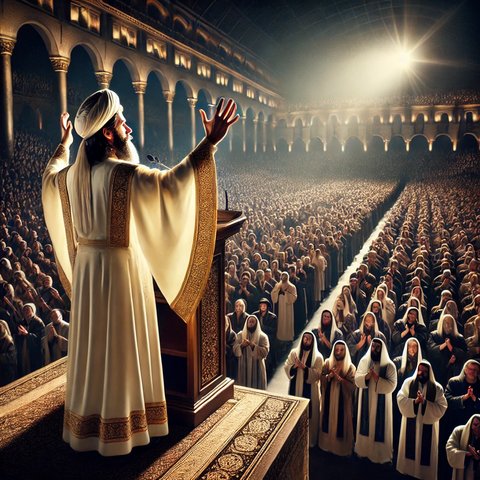 Many religious leaders actively use principles of psychology to attract people to their communities more effectively and encourage them to remain involved. These methods may include both classic psychological techniques aimed at influencing behavior and emotions and more modern approaches focused on personal growth and meeting spiritual needs. Here are several ways they may do this:
Creating a sense of belonging and support: Group psychology shows that people often need to feel part of something larger and to receive social support. Many religious communities offer not only spiritual beliefs but also strong social ties, creating a sense of security and belonging. Religious leaders can use this to offer people support and a community of “like-minded” individuals, strengthening attachment to the group.
Using cognitive influence techniques: Some religious organizations use forms of cognitive influence such as persuasion and suggestion to affect people's perceptions and beliefs. Repeated positive messages, rituals, and traditions, for example, can help create strong emotional ties to a religious system and reinforce its ideas in people's minds.
Emotional influence through rituals and ceremonies: Religious ceremonies and rituals often evoke strong emotional reactions. Psychologically, this can help people feel connected with something higher, reduce anxiety, and experience calm and peace. Practices such as repentance or communion, for example, may function as forms of emotional release, helping people let go of guilt or resentment and strengthening their attachment to religious practice.
Applying principles of motivation and self-development: Many religious leaders address self-development, personal growth, and the search for meaning in life. Drawing on psychological principles of motivation, religion can help people set goals and search for meaning, making it attractive to those looking for inner answers and paths toward personal growth.
Using the psychology of persuasion and communication: Religious leaders who possess charisma and persuasive skill often influence audiences by creating trust and confidence. They may use psychological techniques of verbal influence, such as rhetoric, intonation, and pauses, to strengthen the emotional effect of their messages.
Working with negative emotions and crises: Religious figures often support people going through crisis or trauma, using approaches that resemble psychological helping methods. In such situations people may be more receptive to spiritual support and new beliefs, while help from a religious leader may become associated with restoring psychological balance.
Suggestion and repetition techniques: Frequent repetition of core religious ideas and images helps reinforce them in people's minds. Psychologically, repetition may strengthen confidence in the truth of a belief and form an internal habit around certain convictions. Such methods are often used through sermons, reading sacred texts, and regular religious practice.
Supporting psychotherapeutic approaches: Some religious organizations use integrative approaches in which religion is combined with elements of psychotherapy. Spiritual counseling or religiously oriented therapy, for example, can help people find meaning and support while remaining connected with their religious values. This may be especially effective when a person shares these beliefs and therefore finds it easier to accept such help.
Religious leaders may also turn to more modern methods, including elements of positive psychology, coaching, and neuro-linguistic programming (NLP), in order to build trust and influence people's emotional state.
Psychology in the Service of Religious Sects
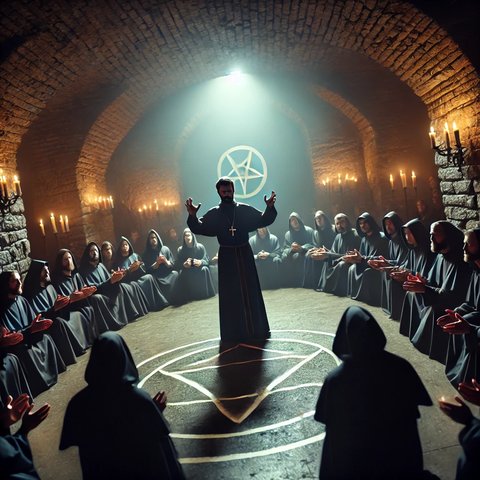 Religious sects actively use psychological methods to attract and retain followers. Unlike traditional religious organizations, sects often use more aggressive and manipulative methods to control members' thinking and behavior. Here are several examples:
Cognitive reframing techniques: Sects may use cognitive reframing to alter how members perceive reality. They may suggest, for example, that the outside world is dangerous and full of “enemies,” convincing members that they are safe only within the sect. This can create fear of leaving and help keep members inside the group.
Information control: One classic method of psychological control is restricting the information members receive. They may be forbidden to read certain books, watch the news, or communicate with the outside world. This creates an information vacuum in which sect leaders can exert far greater control over participants' views and beliefs.
The “us versus them” syndrome: Sects often foster a sense of uniqueness and exclusivity among members by contrasting them with the rest of the world. This approach creates strong emotional ties within the group and increases dependence on the sect because members feel “special” and believe their mission is more important than anything else.
The love and acceptance method: At first, sects may offer unconditional acceptance and attention, which can be especially appealing to people going through crises or experiencing loneliness. This method, often called “love bombing,” creates an illusion of absolute acceptance for new members. Once attachment has formed, however, attention may be replaced by demands, increasing internal control over the member.
Emotional exhaustion and isolation: Many sects deliberately create physical and emotional exhaustion in members, for example through long prayers, demanding tasks, minimal sleep, or insufficient food. This weakens critical thinking, making suggestion and control easier.
Use of group pressure: Sects often rely on group dynamics in which members continually push one another toward accepting shared beliefs and giving up individuality. People are prone to yielding to group pressure, especially when they fear judgment or exclusion from the group.
Disruption of identity and reassessment of beliefs: Sects may offer programs that alter members' self-identification. They may be told, for example, that all their previous beliefs were wrong and that only the sect's “true knowledge” can make them “real” individuals. This process may be gradual so that members themselves come to believe that their identity needs to be “changed.”
Fear and punishment techniques: Some sects use fear of punishment or spiritual consequences to retain members. They may be told that leaving the group or questioning its teaching will lead to catastrophic events, curses, or misfortune. This fear can become so strong that people lose the ability to assess the situation rationally.
“Resetting” the personality: Sects may use methods resembling psychotherapeutic techniques but aimed at “resetting” a person's identity. Groups may hold prolonged emotional sessions in which participants are pressured to reveal weaknesses or trauma and then “helped” through rituals that deepen dependence on the sect and strengthen emotional attachment.
Mystical or charismatic leader: Sect leaders are often charismatic and use psychological principles to convince members of their uniqueness and infallibility. They may claim to possess special knowledge or a connection with higher powers, causing followers to develop strong attachment and loyalty.
An example of these methods can be found in Charles Manson's “Family,” where he used information control and isolation as well as fear-based influence, convincing followers that only within the group would they be protected from outside threats. Another example is the “Church of Scientology,” which is widely known for methods of cognitive control, including strict information control and group pressure, intended to retain followers.
The methods used by sects are based on a deep understanding of human psychology, and their aim is to create strong emotional dependence and a controlled environment in which participants find it difficult to make an independent decision to leave the group.
Religion as a Psychological Tool of the State
 In addition, the state sometimes uses religion as a psychological instrument for strengthening power and maintaining a political order favorable to ruling elites. This can take different forms, from soft propaganda to strict control through religious institutions. Historically and today, several key mechanisms can be identified through which ruling elites use religion in their own interests.
Legitimizing power through religion: In many societies, the ruler's authority is presented as established by God or by a sacred order. This allows elites to claim that their power has not only a secular but also a divine source, making disobedience to the ruler equivalent to sin. Examples:
- In medieval Europe there was a concept known as the “divine right of kings”, according to which the monarch ruled by the will of God and rebellion against the ruler was considered not only a crime but also a sin.
- In the Russian Empire, the Orthodox Church supported the idea of “autocracy”, affirming that the tsar was “God's anointed.”
Control over religious institutions: The state often establishes control over religious organizations in order to use them for its own purposes. This may include appointing loyal church leaders, regulating religious teachings, and limiting the influence of independent religious groups. Examples:
- In China, the officially recognized Chinese Patriotic Catholic Association operates, while independent religious groups are persecuted.
- In the USSR, religion was persecuted, while the Russian Orthodox Church continued to exist under strict KGB control and clergy were used for foreign-policy purposes.
Using religion to justify wars and suppress opposition: Religious ideas can be used to justify aggressive foreign policy or the suppression of internal opponents. Rulers may present military campaigns as struggles for the faith and portray opponents as enemies of God. Examples:
- The Crusades in the Middle Ages were wars sanctioned by the Church that enabled European monarchs to expand their influence.
- In some present-day countries, religion is used to justify patriotism, national identity, and foreign-policy activity, including the use of force.
Creating a “state religion” or granting it special status: Some states proclaim an official religion or create conditions in which one religion receives privileges over others. This may serve both as a tool for controlling the population and for consolidating national identity. Examples:
- In Saudi Arabia, Sunni Islam is the official religion, and the ruling dynasty relies on the support of religious leaders.
- In Iran, religious leaders directly participate in governing the state, and ayatollahs hold enormous power.
Using religious values to shape the “proper” citizen: The state may promote religious values that encourage obedience, humility, and acceptance of social hierarchy. For example, the ideology of “family values” or a cult of self-sacrifice may be used to control society. Examples:
- In some countries, religious ideas are used to restrict women's rights and justify patriarchy.
- Dictatorial regimes often promote ideas such as “suffering purifies” and “a true believer must be obedient.”
Manipulating fear and hope: Religion often touches on fundamental human fears — fear of death, loneliness, and punishment. The state may use these emotions by offering religion as a way to escape suffering while linking it to loyalty to the authorities. Examples:
- In many authoritarian countries, authorities promote the idea that the government is the only defender of the faith against “external enemies” such as secularism, liberalism, or the West.
- In North Korea, the personality cult surrounding the Kim family is built in a way comparable to religion, with the ruler perceived as a “divine” figure.
The state can use religion as a powerful instrument of control, influence, and legitimization of authority. At the same time, religion may function either as a voluntary ally of the ruling elite or as an instrument of coercion. The most successful regimes find a balance between spiritual manipulation and maintaining the appearance of freedom of religion, creating a system in which religion becomes part of the machinery of the state.