



It is safe to say that many of us have experienced anxiety more than once in our lives. Before an exam, our hands turn cold, dozens of scenarios of failure run through our mind, and even a simple “don’t worry” does not help at all. Or another example: you are on your way to an important meeting and suddenly begin imagining that everything will go wrong — you will be late, say something you should not, or do something foolish. We all know moments like these. And, in truth, anxiety in such situations can even be useful: it pushes us to be more attentive and focused.
But there is another side to it. You wake up in the morning already feeling anxious, even though an entirely ordinary day lies ahead. You go to work, talk to loved ones, do your usual things, yet inside it feels as though a string is stretched tight and never relaxes for a moment. Nothing bad has happened, and nothing seems likely to happen, but your heart still beats faster than usual and your thoughts keep circling around “what if” and “suppose that.” Gradually, this feeling begins to control your whole life: it becomes hard to rest, relax, or concentrate when you need to.
At such moments, anxiety stops being a temporary companion and turns into a state that drains energy and attention. And then the question arises: where exactly is the line between natural worry and an anxiety disorder?
Where Is the Line Between Normal Anxiety and an Anxiety Disorder?
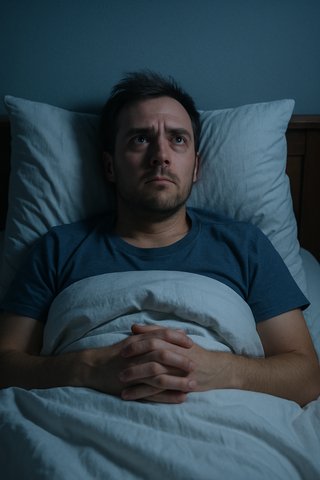 We all know what anxiety feels like. It appears where there is uncertainty: an upcoming exam, job interview, flight, or important meeting. At such moments the heart beats faster, the palms become sweaty, and the mind focuses almost entirely on the event ahead. There is nothing pathological about this. It is a normal protective mechanism that evolved in humans. It makes us more alert and cautious and helps us prepare for a particular challenge. Usually the pattern is simple: the event passes, and the anxiety fades.
Now imagine a different situation. A person goes to bed and starts replaying everything that might have gone wrong that day: whether they answered a colleague correctly, whether they accidentally offended a friend, whether something unpleasant might happen at work tomorrow. Or they walk down the street and, instead of enjoying the weather, think through dozens of possible disasters — an iron left on at home, a brick falling on their head, a sudden illness, and so on. There is no concrete danger, yet the feeling of anxiety remains continuously present, as if an alarm siren somewhere inside simply will not switch off.
This is where the main boundary lies. Normally, anxiety has a beginning and an end: there is a situation — there is worry; the situation ends — the anxiety goes away. With an anxiety disorder, this chain breaks down. Anxiety becomes a constant background state, and even when a person understands that there is no real danger, the body and mind keep reacting as if something bad is about to happen.
This state is not merely unpleasant. Gradually, it begins to drain energy. A person wakes up tired because a “conversation with themselves” has been running in their head all night. During the day, concentration becomes difficult, and thoughts jump from one anxious topic to another. Any small thing can trigger a storm of worry, and instead of enjoying life, the person increasingly lives in continuous expectation of the worst.
Distinguishing between these two states is very important because they affect our lives differently. Normal anxiety can make us more focused and usually passes without lasting consequences. An anxiety disorder, by contrast, can take away the ability to relax and enjoy life even when there is no objective reason for worry.
Put another way, anxiety as an emotion is something we all need; it helps us anticipate danger. But if the alarm starts going off for no reason, that is already a serious problem that should not be ignored.
Generalized Anxiety and Panic Attacks
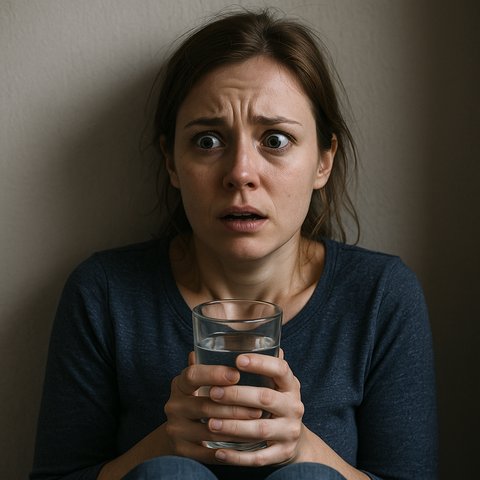 When anxiety crosses the line from normal, it stops being just a reaction to an event and begins to dictate how we live. But it can appear in different ways. For some people, anxiety remains in the background day after day, month after month. For others, it comes in attacks — suddenly overwhelming them, breaking into the usual rhythm of life, and leaving behind exhaustion and negativity.
Imagine someone living with generalized anxiety, in a near-constant expectation that something bad will happen. In the morning they sit down with coffee and, instead of enjoying it, think: “What if I can’t get something done today?”, “What if they find a mistake at work?” During the day they call their child, the child does not answer, and within a few minutes dozens of dark scenarios unfold in their mind. In the evening they go to bed, but rest never comes — the thoughts keep circling: “What will happen tomorrow? What if something terrible happens?”
And so it goes day after day. There are no dramatic disasters and no obvious threats, yet inside there is a constant sense that something is about to happen. The most painful part is that logical arguments do not help. The mind understands: “Everything is fine, there is nothing to worry about.” But the body reacts as though the danger were real: tense muscles, a tight throat, a heart beating faster than usual. The internal alarm keeps going off — the person feels deeply exhausted, yet cannot switch it off.
If generalized anxiety is a background state, a panic attack is usually a sudden burst. It can come unexpectedly. A person may be walking to a store or riding a bus when suddenly the body seems to betray them: the heart starts pounding, breathing becomes irregular, the head spins. A sharp thought appears: “I’m dying,” “I’m losing control,” “I’m going crazy right now.” Minutes feel like an eternity, and no reassurance that “it’s only anxiety” seems to help because the sense of vulnerability feels intensely real.
The attack passes, but fear of another one remains. This fear can sometimes become even more burdensome than the attack itself. A person starts avoiding situations in which an attack once happened: they stop taking the subway, try to avoid crowded places, do not stay alone, or stop flying. Gradually, anxiety narrows the space of life and turns it into a set of prohibitions and restrictions.
Generalized anxiety and panic attacks do, however, have something in common. They are not simply “oversensitivity” or “weakness of character.” They are states that exhaust us. Generalized anxiety steals energy little by little, day after day. A panic attack can drain it all at once, like an unexpected storm. In both cases, life stops feeling calm and turns into a continuous struggle with an invisible enemy.
How to Recognize an Anxiety Disorder and What You Can Try Yourself
 Everyone experiences anxiety, but in some cases it passes quickly, while in others it stays for a long time and gradually changes the whole of life. The main problem with an anxiety disorder is that anxiety becomes a constant companion. It follows a person in the morning and evening, at work and at home, even when there is no objective reason to worry.
One of the most noticeable signs is constant inner tension. A person feels as though the body has forgotten how to relax: the shoulders are tight, the muscles remain tense, and breathing is frequent and shallow. Even ordinary rest does not bring relief — anxiety has taken hold and will not let go.
A second sign is sleep problems. Falling asleep becomes difficult, while anxious scenarios keep running through the mind. Sleep is interrupted when the person wakes in the middle of the night feeling that something urgently needs to be done or thought through. As a result, the morning starts with exhaustion and the day feels endlessly long.
In addition, anxiety can strongly interfere with concentration. A person sits down to work, but instead of focusing on the task, thinks about what might suddenly happen. Thoughts slip away and attention fragments. A constant background of anxiety interferes with whatever is happening in the present.
For those who have experienced panic attacks, another layer of anxiety appears — fear of recurrence. Even if attacks are rare, the person may live in constant expectation that they will return. Gradually, they begin avoiding places and situations in which an attack once occurred, which can narrow their life and reduce social contact.
All these signs are a reason to pay closer attention to yourself. At the same time, it is important to understand that anxiety can be reduced, and the first steps can often be taken on your own.
Sometimes simple but practical techniques help. One example is breathing exercises. One of the most accessible approaches is to inhale slowly for four counts, hold the breath for seven, and exhale for eight. It is not a “magic pill,” but it is simple and may help signal to the body that it is safe to calm down.
Attention-shifting exercises can also help. When anxious thoughts keep circling, you can try counting objects around you, noticing the texture of something in your hands, or putting on music and listening carefully to each sound. After all, there is a reason people have long suggested counting sheep when trying to fall asleep. These small practices can help bring attention back to the “here and now.”
Physical self-care should not be underestimated either. Sleep, regular meals, movement, and avoiding excessive caffeine and alcohol may sound basic, but without them the nervous system has a harder time recovering. And, of course, proper days off rather than working nonstop 24/7.
Another useful technique is to keep an anxiety journal. By writing down anxious thoughts, a person may gradually notice that many feared outcomes do not actually happen. This can weaken confidence in anxious predictions.
Of course, such methods do not always solve the problem completely. But they can help restore the feeling that anxiety is something you can influence. And that is already an important step toward greater inner calm.
When to See a Specialist
Anxiety can be deceptive. At first, it seems that everything is under control: “Yes, I worry a lot, but it will pass if I just get enough sleep or take a vacation.” A person endures it, comes up with explanations for how they feel, and hopes everything will “sort itself out.” Sometimes a short break really does help, but often the anxiety simply becomes more deeply rooted.
There are several signs that clearly suggest it is better not to postpone seeking help and to see a specialist. One is when anxiety begins to interfere with everyday life. If it becomes difficult to concentrate at work, rest no longer brings relief, and free time is spent replaying anxious thoughts, that is a clear signal.
Another warning sign is when the body remains in constant tension. The heart beats faster than necessary, breathing becomes irregular, and the muscles feel tight. All of this is exhausting and gradually leads to fatigue that even a full night’s sleep does not fix.
The fear of another panic attack can be especially difficult. People begin avoiding the subway, stores, meetings, and eventually their world grows smaller. If life is becoming more restricted and anxiety is setting the rules, it is time to ask for help.
Seeing a psychotherapist or psychiatrist is not a weakness and not a sign of “complete defeat.” It is simply a meaningful step toward getting a calmer life back. Psychotherapy can help a person understand how anxiety works and learn to manage thoughts and reactions. When needed, modern medications can also reduce symptoms and help restore a sense of calm.
Think of it this way: we are walking through life with a heavy backpack full of stones. At first it seems manageable, but over time our strength runs out. Seeing a specialist is not “giving up”; it is asking someone to help unload the backpack and learn how not to fill it again. As with any serious problem, it is important not to postpone seeking help. The earlier a person takes this step, the sooner anxiety can stop being the center of life and life itself can begin to feel wider and lighter again.
 Anxiety is part of our nature. It helps us pay closer attention to our surroundings, respond faster to potential danger, and mobilize our resources when facing challenges. Without it, we would not have survived. But sometimes this ancient mechanism misfires and starts working in the wrong way or at the wrong time. Then anxiety stops helping and becomes a serious obstacle.
So, anxiety is not a sentence. As already mentioned, the first step is to notice that anxiety has begun to control your life. The second is to recognize that this is not simply weakness or an “imagined problem,” but a state that can and should be addressed.
Everyone has their own path back to calm. Some people benefit from breathing exercises and taking care of the body. Others benefit from talking with loved ones and simply returning attention to the “here and now.” And some need a specialist who can help ease the mental burden and work through anxiety. The main thing is not to remain alone with it. The sooner a person recognizes that this is something worth addressing, the sooner what has been lost can return: restful sleep, clear thoughts, and enjoyment of simple things.