



“I don’t have time” is one of the most common complaints in the modern world. We feel rushed, exhausted, and constantly behind our own schedules. Even a day off often turns not into rest, but into an endless list of things we “should” do. And the more digital assistants, reminders, and to-do lists we have, the more anxious we seem to become.
But what is the real problem? Time passes at the same rate for everyone. We all have 24 hours in a day. Yet some people manage to maintain balance, deal calmly with important tasks, and still live “on their own terms,” while others drown in deadlines, procrastination, and guilt. Why?
The answer often lies not in the number of tasks, but in the psychology of our relationship with time. We do not simply plan — we experience. We do not simply put things off — we worry. We do not simply set goals — we often devalue ourselves when we fail to keep up.
This article is not about how to make a to-do list. It is about something else:
- how to relate to time psychologically so that it stops feeling like an enemy;
- how to recognize your own “time traps” and get out of them;
- which methods actually work with our emotions and thinking instead of merely filling up a calendar.
Effective time management is not about controlling every hour. It is about seeing what matters, separating the important from the urgent, taking care of yourself, and living in a way that does not leave you wishing at the end of the day that you could “rewind it and do everything over.” So let us look at what really lies behind the phrase “I don’t have enough time.”
Time Management and Mental Traps: It’s Not About the Hours
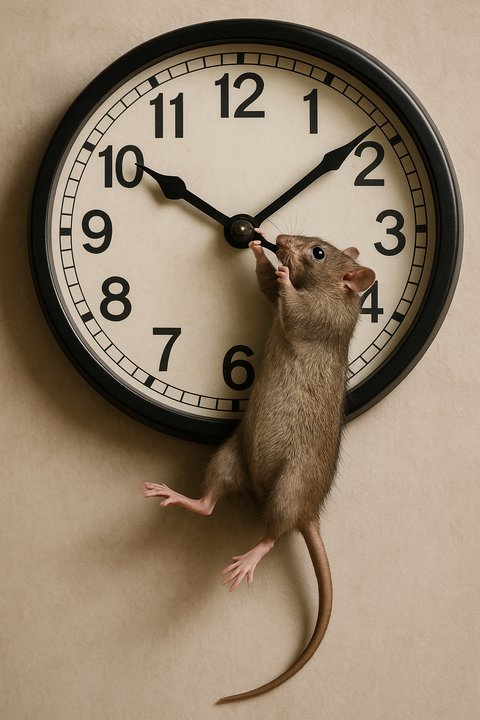 When we think about time management, the first things that come to mind are calendars, schedules, timers, and to-do lists. It seems that if everything is planned correctly, life will somehow fall into place. But the problem is that time does not slip away because we lack notebooks or apps, but because of the way we think and feel about time.
A person can be incredibly productive and still feel empty. Or, conversely, spend the day reflecting and feel that the day was lived deeply and meaningfully. Time management is not simply about “getting everything done,” but about knowing how to choose what matters most and giving yourself permission not to finish what is unnecessary.
Psychological Traps That Keep Us from Living Well in Time
Procrastination or “I’ll start in an hour... tomorrow... someday...” In practice, this is not simply laziness. It can be a form of emotional protection. Fear of failure, pressure from expectations, or a sense of overload can paralyze us. We postpone not because we do not want to act, but because we want too much to do it perfectly or fear that we will not cope.
Perfectionism and “all or nothing” or “If I can’t do it perfectly, I’d rather not start at all.” This way of thinking is deceptive. It keeps us motionless when we could at least do something. The result is guilt and a sense of wasted time.
The illusion of busyness or “I’m exhausted, I was busy all day.” But if we ask what was actually accomplished, the answer may be vague. We spend time on small things, “put out fires,” and postpone what really matters. In the end, we are busy — but not effective.
Chaos and scattered attention or “I need everything at once.” When there are no priorities, everything seems important. We jump between different tasks, leave things unfinished, and feel anxious. This creates a vicious circle: the more tasks there are, the less control we feel.
The inner critic or “You didn’t get anything done again...” Many people know this voice well. It does not motivate — it burns us out. Because of it, we fail to celebrate successes, cannot rest without guilt, and constantly feel like “bad” managers of our own time.
So the essence of time management is not about squeezing the maximum number of tasks into the fewest possible hours. It is about understanding your psychological patterns, recognizing the emotions that hold you back or push you forward, and choosing actions based on meaning, not urgency alone.
Inner Navigation Through Time: Mindfulness, Emotions, and Environment
 When we want to manage our time, we often look outward: at calendars, advice, and systems. But real change begins within. Mindfulness, working with emotions, and a healthy environment form an inner navigation system. Without it, even the best time-management tool may fail.
The first step toward change is to notice what is actually happening. Try to formulate answers to these questions:
- Where does my time go?
- What do I feel when I put things off?
- What do I give up when I agree to take on one more task?
Keeping a time diary — literally writing down every 30 minutes what you are doing — is not tedious bookkeeping but a discovery process. We often see that procrastination is not emptiness, but a reaction to anxiety, fatigue, or overload. Try this for one week: every evening, answer three questions:
- What did I do well today?
- What drained most of my energy?
- What can I change tomorrow to make things easier?
We often try to “force ourselves.” But the truth is: an inner whip does not make us faster — it makes us burn out. Instead of self-criticism, psychologists suggest:
- Replacing harsh statements with supportive ones, for example, “I ruined the day again” → “Today was difficult, but I did what I could”
- Looking for the reasons behind procrastination. Often, behind “I can’t start” there is fear: of making a mistake, being ridiculed, or failing. This is not necessarily about weakness; it can be about self-protection.
- Introducing small activation rituals — for example, a cup of tea before focused work or three minutes of breathing to help yourself enter the flow.
We often try to be superheroes: to control everything and do everything ourselves. But the mind is such that context often influences us more strongly than willpower. In other words, a chaotic environment can create chaos in the mind, while support creates room for growth. What can help here:
- A “focus partner”: someone with whom you agree to start working at the same time, even if you only check in by message.
- Working in “quiet zones” — cafés, coworking spaces, libraries — where distractions are limited.
- Limiting notifications — a simple but powerful step. Our concentration is worth more than any push notification.
And always remember one simple truth — time is not the enemy. It simply asks you to be present in the moment, be honest with yourself, and allow yourself to be human rather than perfect.
Psychological Methods and Techniques
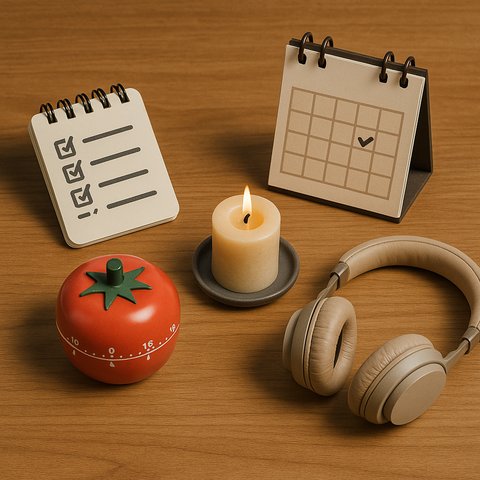 Time management does not require heroism. It is more about treating yourself with care, being a little more honest with yourself, and using suitable tools. Below are practices that help not merely to “get everything done,” but to stay in touch with yourself.
The Three-Task Method: Less Can Be More
When a to-do list grows to 15–20 items, anxiety and procrastination can set in. We do not know where to begin — so we begin nowhere. What can you do? Every morning — or the evening before — choose three main tasks for the day: one that is the most important, one that is unpleasant but necessary, and one that is short and easy so you can build momentum. Think of it as a mental filter: everything else is a bonus. If you complete only these three, the day is already a success.
Psychological effect: less pressure, more focus, and a greater sense of completion.
The Eisenhower Matrix: Setting Priorities Honestly
Sometimes we are busy all day — but with the wrong things. The Eisenhower Matrix helps clarify what is really worth spending energy on.
| Urgent | Not urgent | |
| Important | Do now | Schedule |
| Not important | Delegate | Eliminate |
Examples:
- Urgent and important: a deadline, a call from a client.
- Important but not urgent: learning, health care, development.
- Urgent but not important: “call urgently, but it is not actually your responsibility.”
- Not important and not urgent: endless scrolling or chatting about the weather.
Psychological effect: you begin to see where your time is being wasted and redirect your energy toward what truly matters.
The Pomodoro Technique: Working in Small Chunks
It was created by an Italian student using a tomato-shaped kitchen timer. The idea is to alternate short periods of focused work with rest. The basic pattern:
- 25 minutes of work
- 5 minutes of rest
- After 4 such cycles — a 15–30 minute break
It is like training your concentration. It is easier for the brain to settle into work when it knows a break is coming soon.
Psychological effect: it can help overcome the inner “I don’t want to” and make it easier to start, even when the task feels difficult.
Time Blocking: Plan the Rhythm of the Day, Not Just Tasks
Instead of using only a to-do list, you reserve specific blocks of time for particular types of activity. For example:
- 9:00–11:00 — focused work, such as writing an article
- 11:00–11:30 — coffee and messages
- 12:00–13:00 — meetings
- 14:00–15:00 — creative work / thinking
- 16:00–17:00 — routine tasks
You plan time rather than individual tasks. This creates structure and reduces the constant need to decide, “What should I do now?”
Psychological effect: less fatigue from multitasking, more clarity and predictability.
Activation Rituals: Get Yourself into the Right Mode
Our brain responds well to familiar cues. If before an important task you light the same candle, play favorite music, or simply spend three minutes looking out the window, this can become a ritual for entering a focused state. Examples:
- putting on headphones = “I’m working now”
- making coffee = “I’m starting my morning”
- clearing the desk and opening the laptop = “I’m ready for the project”
Psychological effect: less resistance to starting, more automaticity, and a stronger sense of context.
Checklist: You May Be Losing Time If...
- You constantly switch between tasks.
- In the evening, you cannot remember what you spent the day doing.
- You have a to-do list, but you avoided the most important items.
- You often say “yes” automatically, even when you are already overloaded.
- You feel guilty when you rest.
- You wait for the perfect moment to begin.
If you recognize yourself in this list, do not panic. It is not a verdict, but a place to begin.
We cannot stop time. But we can stop fighting it and learn to live in partnership with it. Time management is not about doing more, but about not losing sight of what matters most. Everyone has the right not to be productive 24/7, to rest without guilt, to choose what is important even if it is not urgent, to say “no” without explaining, and to move forward in small steps!
Real time management is the management of attention, energy, and self-care.
And that is where a life begins in which you are no longer trapped by the hands of the clock, but hold your own time in your hands and use it consciously and effectively.