



Every night we fall asleep hoping simply to rest and recover. But what if sleep is more than rest — and plays a key role in our mental health? And what if, in depression, it can become not merely a source of support but a real therapeutic tool?
Depression is one of the most common mental disorders in the world. According to the WHO, one in five people experiences its symptoms at least once in life: low energy, loss of interest in life, anxiety, and sleep disturbances. Sleep problems in particular are often seen as a consequence of depression rather than as one of its possible causes. But recent research suggests the relationship may also work in the opposite direction.
Scientific studies published in 2023–2024 increasingly suggest that adjusting sleep patterns can not only improve overall well-being but also speed recovery from a depressive episode. This is especially important when medication may take weeks, and sometimes months, to produce a noticeable effect. Sleep, meanwhile, is a resource available to all of us, and work on it can begin today.
Why do we still underestimate its importance? Perhaps because since childhood we have heard: “Get some sleep and it will pass.” And if it does not pass, then the problem must lie elsewhere. But today science suggests looking at sleep differently: as an active part of therapy, especially when depression is involved.
In this article, we will talk about:
- how sleep is disrupted in depression,
- which approaches modern specialists use to restore it,
- and how simple changes in evening habits can help bring back a sense of enjoyment in life.
Sleep Disturbances in Depression: A Vicious Cycle
 When a person is experiencing depression, sleep is often one of the first things to change — or rather, its absence or, conversely, an excessive amount of it. Some people struggle to fall asleep, toss and turn until three in the morning, and then can barely get out of bed. Others sleep lightly and wake very early, as if an alarm clock had gone off inside them long before dawn. And some can sleep for 12 hours a day and still feel exhausted. These states may seem opposite, but they can all occur in depressive disorders.
Studies show that up to 90% of people with clinical depression experience sleep disturbances. This is one of the most persistent and troublesome symptoms. Why troublesome? Because sleep and depression have a complex two-way relationship. Poor sleep can worsen depressive symptoms, while depression can disrupt sleep. The result is a vicious cycle that can be difficult to break without help and deliberate intervention.
At the physiological level, there are understandable mechanisms. People with depression may have disrupted circadian rhythms — the internal clocks that regulate when we feel alert and when we feel sleepy. Changes in the production and timing of melatonin, a hormone involved in sleep regulation, can disturb the body’s natural rhythm. Elevated cortisol, a stress hormone, can also make falling asleep more difficult: the body wants rest, but the brain does not seem ready to switch off.
There is another factor as well: psychological resistance to sleep. For many people with depression, nighttime becomes a period of anxious thoughts, intrusive memories, and a heightened sense of loneliness. They may therefore delay going to bed, fear the night, and replay endless scenarios in their minds. In the morning they wake up feeling guilty and tired. And then the cycle begins again.
It is important to understand that insomnia is not merely an unpleasant side effect of depression. It can also help maintain the disorder. If it is ignored, treatment may progress more slowly than we would like. That is why restoring healthy sleep is not a secondary task, but one of the priorities on the path toward improvement.
Sleep Therapy: Types and Approaches
If sleep is so important in depression, a logical question arises: can we learn to sleep better? And, most importantly, can that speed recovery?
Modern science answers: yes. Moreover, sleep-focused therapy is recognized as an effective approach not only for treating insomnia, but also as a useful component of depression treatment — especially in combination with other approaches such as psychotherapy and medication.
Below is a brief overview of some of the most effective approaches to correcting sleep problems used in depression.
Cognitive Behavioral Therapy for Insomnia (CBT-I)
This is one of the best-supported methods. CBT-I helps change not only behavior but also the way a person relates to sleep: reducing anxious expectations, becoming less afraid of the night, and forming healthier bedtime routines.
For example, a patient learns not to lie awake in bed for two hours, but to get up and return only when sleepy. Thoughts such as “I won’t fall asleep and tomorrow everything will go badly” are also examined and replaced with more realistic alternatives.
 Light Therapy
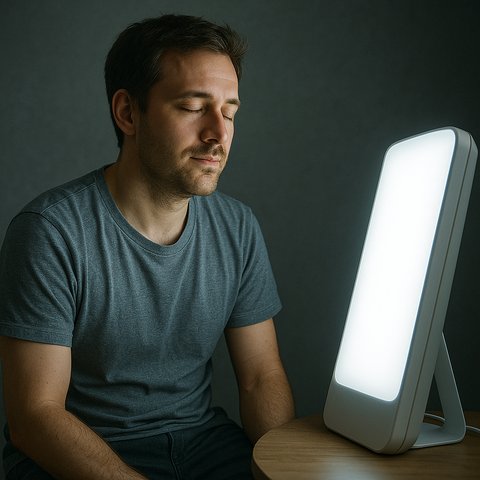
The idea is to influence circadian rhythms with bright light that mimics natural daylight. It can be especially useful for people whose depression worsens during the darker months of the year — seasonal affective disorder — or whose sleep schedule has shifted unusually late.
A special light box is usually used in the morning. In some people, improvements in low mood and overall energy can be seen within one or two weeks.
Sleep Deprivation (Controlled Sleep Loss)
Paradoxically, temporary sleep deprivation can produce a rapid, though often short-lived, antidepressant effect. For example, one night of total or partial sleep deprivation may reduce low mood and anxiety by the following day in some patients.
However, this method requires caution and is used under professional supervision, because symptoms can return quickly and some patients may experience worsening.
Regularizing the Sleep Schedule
Sometimes the main thing is not an exotic technique, but simple and consistent work on the daily routine. Going to bed and waking up at the same time, reducing evening gadget use, and limiting daytime naps can help reinforce healthier sleep patterns, support circadian rhythms, and improve mood.
Interestingly, studies from 2023–2024 reported that a regular sleep schedule, even without changes in medication, was associated with a noticeable reduction in depressive symptoms within several weeks in people with mild to moderate depression.
New Findings: Accelerating Treatment Effects Through Sleep Correction
Until fairly recently, sleep was often treated as secondary in depression care. Most attention went to antidepressants, cognitive therapy, and, in rarer cases, biological treatments such as ECT. But newer studies increasingly suggest that working directly with sleep can strengthen and sometimes accelerate the effects of standard treatment.
Particularly interesting are recent clinical observations in which sleep correction was carried out alongside psychotherapy. In one such study, patients receiving CBT for depression while also completing a program to normalize sleep improved more quickly than those who worked only on mood symptoms.
 Faster Improvement Through Restored Rhythms
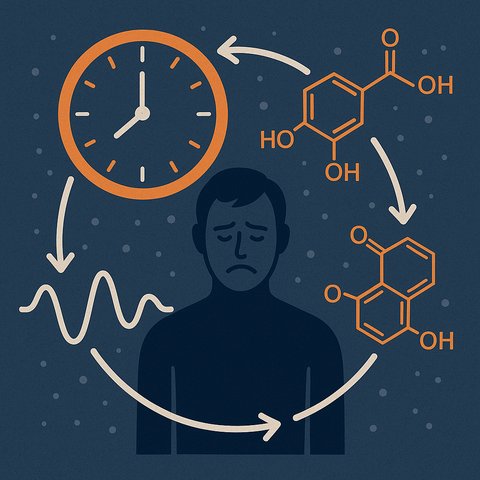
What happens in the body? Disrupted sleep affects many biochemical processes. Among them are systems involving neurotransmitters and hormones such as serotonin, melatonin, and dopamine, which are associated with mood, anxiety, and the stress response. Dopamine belongs to the catecholamine family, whose members share a characteristic catechol structure; serotonin and melatonin, however, belong to different biochemical classes.
When sleep is disrupted, these systems can become dysregulated. Levels of inflammatory markers may increase, while functioning in parts of the prefrontal cortex involved in decision-making, concentration, and emotional control may be affected. As a result, a person can become more irritable and low in mood, lose motivation, and find it harder to think clearly.
The good news is that the brain can recover, sometimes surprisingly quickly. When a person begins sleeping on a more regular schedule — going to bed and waking up at roughly the same time — the body receives more consistent timing signals. Within days or weeks, some people notice less anxiety, clearer thinking, and more energy and initiative.
That resource — a better-rested brain — can make it easier to work effectively with thoughts, habits, and emotions. In this way, depression therapy may become easier to engage with and more effective.
Circadian Shift as an Early Predictor of Improvement
An interesting conclusion was reported in research conducted at Stanford University in 2023. Researchers followed patients being treated for depression and paid attention to one important but initially unobvious measure — the timing of sleep during the first two weeks of therapy. Participants whose circadian rhythms began to shift toward a more regular pattern — for example, by going to bed at least half an hour earlier than usual — later tended to improve more quickly and steadily than those whose rhythms remained disrupted. In some cases, this change appeared before medication or psychotherapy produced a clear subjective effect. The observation led the authors to suggest that sleep may serve as an early biological marker of treatment response. If sleep timing begins to normalize early in therapy, it may indicate that the body is responding even before the person notices an obvious improvement. This opens an interesting possibility: changes in sleep — especially regularity and timing — could serve as one indicator of treatment progress, a kind of “biological feedback” between the body and the clinician. This is particularly relevant in depression, where visible improvement can be slow and it may be difficult to know early on whether a chosen treatment is working. In this sense, sleep becomes not only part of therapy but also a potential barometer of recovery.
Small Changes — Meaningful Results
Even small behavioral changes that seem insignificant can have a noticeable effect. In one observational study conducted in 2024, researchers reported an interesting pattern: among patients with depression and insomnia who agreed for one month to limit smartphones and other screen devices during the hour before bedtime, both sleep quality and emotional well-being improved. Depressive symptoms also decreased, without changes to medication or psychotherapy. In other words, evening digital discipline alone appeared to make a meaningful difference.
What makes this idea especially valuable is its accessibility. Not everyone can immediately begin a full course of therapy: some find it difficult to decide to see a specialist, others are not ready for deeper psychological work, and some do not yet have the resources for regular treatment. But almost anyone can put the phone away an hour before bed. It is a simple, concrete step that requires no financial cost, extreme willpower, or deep self-analysis. In this sense, sleep can become an “entry point” into recovery — a door through which a person begins to reconnect with themselves.
Sustainable improvement often begins with changes like these. They do not solve the whole problem, but they create better conditions for other efforts to work: psychotherapy, support from loved ones, and thoughtful lifestyle changes. Sleep is not a passive state, but a period in which the brain carries out important restorative processes, and our task is to create conditions that allow those processes to happen.
Practical Recommendations: How to Improve Sleep in Depression
 When your mood is at rock bottom and your energy is almost gone, organizing your sleep can feel like an impossible task. In practice, however, improving sleep does not begin with perfect conditions or rigid discipline, but with small, regular steps. Below are practical suggestions that do not require special knowledge or expense.
1. Get up and go to bed at the same time — even on weekends
Your body likes predictability. A stable waking and bedtime schedule helps reinforce your internal biological clock. Even if you did not sleep well, try to get up at roughly the same time in the morning. Over time, falling asleep may become easier.
2. Light is your ally in the morning and your opponent in the evening
Spend as much time as you can in daylight, especially in the first half of the day. Morning walks or even ten minutes near a bright window help provide the body with daytime signals and suppress melatonin production. In the evening, do the opposite: dim the lights, especially light from smartphone or computer screens. Bright light at night can delay sleepiness and make it harder to fall asleep.
3. Turn the evening into a relaxation ritual
Our brain likes predictability. If you do the same things every evening — for example, dim the lights, take a warm shower, read ten pages of a book — the brain begins to treat them as a signal: “It is time to rest.” Try to avoid highly stimulating activities in the evening, such as arguments, fast-paced shows, or repeatedly checking the news.
4. Do not fight with sleep in bed
If you cannot fall asleep for a long time, do not remain in bed indefinitely. Get up, move to another room, and do something quiet and monotonous — for example, read a paper book or listen to calm music. Return to bed when you feel sleepy. This can help prevent the bed from becoming associated with anxiety and insomnia.
5. Limit daytime naps
If you are not sleeping well at night, the temptation to sleep during the day can be strong. But long daytime naps can interfere with nighttime sleep. If you really need a nap, try to keep it to around 20–30 minutes and earlier in the day.
6. Do not try to “wait out” depression in bed
One of the traps of depression is the desire to lie down, do nothing, and “wait for it to pass.” But spending long periods in bed while awake can worsen sleep patterns. Try to reserve the bed mainly for sleep. If you need to rest, it may help to move to a sofa, change position, or sit somewhere else for a while.
7. Do not make “fall asleep at any cost” your goal
Sleep is not a task that can be solved by force of will. The more you worry about not being able to sleep, the harder it can become. Instead of concentrating on sleep itself, focus on creating conditions in which sleep can come naturally.
Remember: improving sleep is not something that happens in a single evening. But even small steps can matter. If you notice no improvement after two or three weeks of changes, speak with a specialist — insomnia associated with depression can often be treated effectively, especially with appropriate professional support.
Conclusion: Sleep Is More Than Rest — It Is a Resource for Recovery
Sleep is not simply what happens in the dark when we close our eyes. It is an active, biologically necessary process that affects every system in the body — and especially the mind. And although depression can rob a person of healthy sleep, improving sleep can become part of the path out of depression.
We have seen that:
- insomnia is not only a symptom, but also a factor that can help maintain depression;
- correcting sleep patterns can support and sometimes accelerate recovery;
- even small changes — morning light, a stable schedule, an evening ritual — can help;
- sleep-focused approaches do not necessarily require expensive treatments and many basic steps are accessible to most people willing to give them some time and attention.
Important: if you or someone close to you is experiencing depression, start with something simple — work on sleep. This does not replace psychotherapy or medication when they are needed, but it can make treatment easier and more effective. In some cases, it can also become one of the first steps toward recovery.
Taking care of your sleep means taking care of your energy, emotions, and resilience. In a world where people increasingly talk about burnout, anxiety, and exhaustion, this simple form of self-care may matter far more than it seems at first glance.