



You have probably heard someone say at least once in your life: “You take everything too personally,” or “Don’t be so sensitive.” Such phrases usually sound like criticism, as though something were wrong with you. Women, teenagers, and people who are naturally quieter, calmer, or more reflective hear this especially often.
But what if your sensitivity is not a weakness or an “overreaction” at all, but simply a trait you were born with? What if the problem is not that there is something “wrong” with you, but that you are a person who feels more, more deeply, and more subtly?
The world we live in is loud, fast, and demanding. Strength, resilience, and composure are often highly valued. And when someone is deeply affected by a harsh remark, upset by conflicts between people, or exhausted by a crowded subway, it can be dismissed as unnecessary dramatization. But in reality, things may be much simpler and more natural than they seem.
Let us simply look at what lies behind this “too sensitive” nature — where it comes from, what actually makes such a person different, and how to learn to live with this quality without suppressing or hiding it, but by accepting it and taking care of yourself.
What Is High Sensitivity?
 Psychologist Elaine Aron (Elaine N. Aron, USA) began studying the phenomenon of heightened sensitivity in the 1990s after noticing that some people seemed to perceive the world not merely more deeply, but almost as if through a magnifying glass. They become tired more quickly from noise, bright light, and rushing; conflicts and criticism are harder for them; yet at the same time they are more sensitive to other people’s moods, notice the smallest changes in the atmosphere, and pay much closer attention to details — both emotional and sensory.
Aron called such people highly sensitive and introduced the abbreviation HSP — Highly Sensitive Person. According to her research, such people make up roughly 15–20% of the population. This is not an illness, a disorder, or some form of neurosis. It is an inborn personality trait with a biological and neuropsychological basis. In highly sensitive people, for example, brain areas involved in information processing, attention, and empathy are more strongly activated. Their nervous system is simply more “finely tuned.”
Such people do not merely notice more — they process what they notice more deeply. This applies not only to information and sensations, but also to emotions, impressions, and atmosphere. A highly sensitive person may replay something someone said, their tone of voice, or a look for a long time afterward. It matters to them to understand what was really behind it — aggression? fatigue? disappointment? — and this reflection can continue in the background for hours after the conversation itself has ended.
Empathy is another key characteristic. Highly sensitive people do not simply understand other people’s feelings — they experience them. If someone nearby is angry, distressed, or in pain, an HSP may feel it almost physically, even if the person has not said anything aloud.
A strong response to external stimuli is also common: loud sounds, bright light, strong smells, and constant bustle can cause irritation, anxiety, or rapid fatigue. Such people are not “too delicate,” as they are sometimes called. Their sensory system simply works at a higher intensity and becomes overloaded faster than most people’s.
It is important to remember that high sensitivity is not the same as anxiety or weakness. An HSP can be perfectly resilient, strong, and capable of handling difficulties while still remaining highly receptive. These qualities are not opposites; they can exist side by side.
Why Is It Hard to Live with High Sensitivity?
 Being highly sensitive is like having an internal antenna that picks up everything. Not just the music, but the noise behind the wall. Not just the conversation, but the intonation. Not just another person’s emotions, but even what they themselves have not yet realized. And with this “antenna,” you move through life — on public transport, at work, in relationships — which can increase the risk of burnout.
A sensitive person can become tired in situations where most people barely notice any strain. A crowded subway, phone calls, rushing, several conversations happening at once in the office — all of this begins to accumulate inside, layer upon layer. And while other people may simply call the day “busy,” for someone with HSP it can end in a feeling of complete inner exhaustion, even if everything seemed to be proceeding in an ordinary, routine way.
Work or study in open spaces, noisy groups, and environments where you constantly have to “keep up appearances” can be especially difficult. Other people’s emotions can feel like waves crashing against your inner walls. Someone argues at the next desk — and your stomach is already tightening. Someone is sad — and you begin to feel that sadness too, even if nobody has said a word about it. News, tragedies, global events — all of this can be perceived not simply as information, but almost as a blow to the heart. One, then another, then another — and before long there is emotional burnout, and it can feel as though there is simply no energy left to feel anything.
There is one more thing worth adding that is rarely discussed — boundaries. Highly sensitive people often find it hard to say “no”. Not because they are weak, but because empathy and the desire to help are strong in them. Refusing can feel like hurting someone. Saying no can feel like letting someone down. As a result, they take on more than they can carry. Work, caring for others, emotional support — all of it can add up to the feeling that you are slowly being “taken apart” piece by piece.
And if you do not notice this in time, you can remain stuck for a long while in a state where all you want is to hide under a blanket and speak to no one. Not because something is wrong with you, but because too much is passing through you and you do not have enough time to recover.
Why Is It Not a “Problem,” but a Trait?
When someone notices that they react more intensely than others to everything — sounds, words, faces, even the weather — it is easy to think that something is wrong with them. Especially when people around them constantly suggest that feeling “too much” is a weakness, unnecessary dramatization, immaturity, or an overly “delicate emotional nature” in a dismissive sense.
But in reality, high sensitivity is not a malfunction or a defect. It is simply a different way of perceiving the world. People with this trait often notice far more than what is usually considered “normal.” Their attention catches small details, half-tones, and hidden meanings. They do not merely see — they feel the depth of what is happening. And, surprisingly, this quality can become an enormous resource.
Many highly sensitive people are drawn to creativity. Not because they must necessarily be artists or poets, but because they notice what others often miss: shades of light, changes in intonation, nuances of behavior, subtle emotional experiences. They can be deeply attentive to other people — not superficially, but genuinely. Their empathy and ethical sensitivity are often well developed: they quickly notice when someone is hurting, uncomfortable, or simply needs to be heard.
Sometimes sensitivity becomes a bridge into the world of art, nature, and inner life. Such people often find particular value in beauty — not necessarily museum beauty, but ordinary everyday beauty: the way light falls on a wall, the sound of a loved one’s voice, the way grass moves in the wind. This is not romanticization, but a real way of experiencing the world more deeply, subtly, and fully.
Incidentally, many famous people whom we now regard as great thinkers or artists could, judging by descriptions from their contemporaries, quite possibly have been highly sensitive.
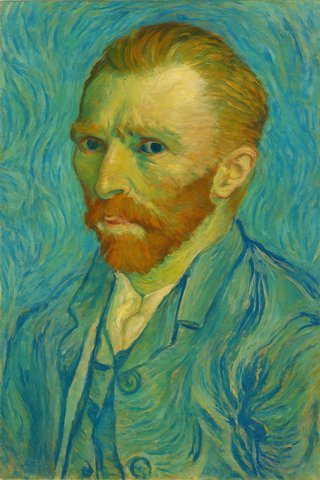 Vincent van Gogh, for example, seemed to feel not only colors, but also the mood of a landscape, the light, and the finest changes in nature. He painted almost as if in an inner storm, as though the whole world were passing through him. His letters to his brother Theo are full of pain, self-reflection, longing, and extraordinary depth of feeling. Many of his most moving works can be seen as reflections of that same sensitivity that gave him no peace throughout his life.
Virginia Woolf — the writer whose work helped shape what we now call “stream of consciousness” — wrote as though she were listening not to external events, but to a person’s inner voice. She noticed what usually slips past us: subtle psychological shifts, almost imperceptible fluctuations of feeling, vague sensations that are difficult to put into words. At the same time, she reacted painfully to pressure from society and her social circle — her sensitivity was not only a literary gift, but also a source of suffering.
Carl Jung, although he was a physician and psychiatrist, spent his life exploring things that strict science could not easily capture: myths, dreams, and archetypes. He had a remarkable ability to sense atmosphere and symbols and intuitively grasp deep processes taking place in the human psyche. Many of his ideas, such as the “collective unconscious” or the “shadow,” would be difficult to imagine without a deeply receptive and sensitive nature.
These people became great not despite their sensitivity but, on the contrary, because it became one of their keys to the inner world, great skill, and an active search for meaning. This is precisely where the value of high sensitivity can be seen. Yes, living with it can sometimes be very difficult. But it can also provide access to experiences and perceptions that remain out of reach for many other people.
How to Help Yourself — and Why It Matters
 If you recognize yourself in this description of a sensitive person — getting tired from noise, reacting strongly to other people’s emotions, replaying everything in your head for a long time afterward — then you have probably tried more than once to change yourself. To restrain, hide, or “toughen up.” But the truth is that this brings no real benefit; it only distances you from yourself. High sensitivity is not a flaw or a whim. It is one way your nervous system perceives the world. Slightly different, more finely tuned, sometimes very difficult — but still normal.
The first thing that truly helps is simply acknowledging: “Yes, this is how I am, and I am wired differently.” Without blaming yourself, without shame, and without trying to become like everyone else. This is not giving up; on the contrary, it is the first step toward awareness and stability. Once you accept this trait, you stop fighting it pointlessly and begin building your life with it in mind.
It also helps to practice what might be called “stimulus hygiene”: giving yourself permission for quiet, pauses, and time outside the constant stream of events. Sometimes this means simply taking a walk without your phone. Sometimes it means an evening without news, calls, or conversation. Or, conversely, a conversation with someone close after which you feel not drained, but more alive.
One skill that can be especially difficult for sensitive people is saying no. Saying “no” without apologizing or feeling like a bad person. Not agreeing when something feels wrong. Stopping things when people begin placing “too much” on you or manipulating you. This can feel unfamiliar and sometimes even painful, especially if you are used to being “easy” and “reliable.” But it is through establishing these boundaries that a sense of support begins to appear — both inside and around you.
And if you feel that you cannot manage alone, psychotherapy can become a space where nobody tries to make you “stop being this way,” but instead helps you understand how to live with it. It is a space where you learn to be attentive to yourself even while things outside are still stormy.
It is also very important to find people around whom you do not have to explain that something is wrong with you, because they simply understand. They may be people you meet online, in books, in support groups, among friends, or in your family. Sometimes one sentence — “I feel that way too” — gives more than a hundred pieces of advice from different specialists.
When someone tells you, “You’re too sensitive,” they may not even realize that, in a way, they are giving you a genuine compliment. The ability to feel deeply is not something you should try to get rid of. It is part of you and perhaps one of your most valuable qualities.
The goal is not to become tougher, louder, or colder. The goal is to learn to live with yourself in such a way that this sensitivity does not exhaust you, but helps you stay closer to life, to other people, and to yourself. To learn not to fight it, but to work with it. Not to hide, but to build an environment around yourself in which you can breathe freely.
If you are sensitive, that does not make you weak. It simply means that you can notice what others cannot!