



The phrase “I love, therefore I suffer” sounds as though real love cannot exist without pain and torment. We encounter this myth everywhere: in films and books, in songs and in stories told by people close to us. There is often little room in them for calm, respectful love — but plenty of passion, jealousy, tears, and sacrifice. Gradually, we begin to believe that if everything is calm and simple, then it cannot be love. And if it hurts, then that must be the real thing.
In reality, love and dependency are two different experiences. Love makes us stronger and freer and gives us a sense of warmth beside another person. Dependency, by contrast, narrows life down to fear and control, taking away joy and self-confidence. But telling one from the other is not always easy — especially if we have been accustomed to dramatic patterns since childhood.
In this article, we will look at how genuine love differs from painful dependency, which signs reveal an unhealthy attachment, why we so often confuse one with the other, and how to recognize it in our own lives. And at the end, we will discuss what you can do if you recognize yourself in this description.
What Is Love and How Is It Different from Dependency?
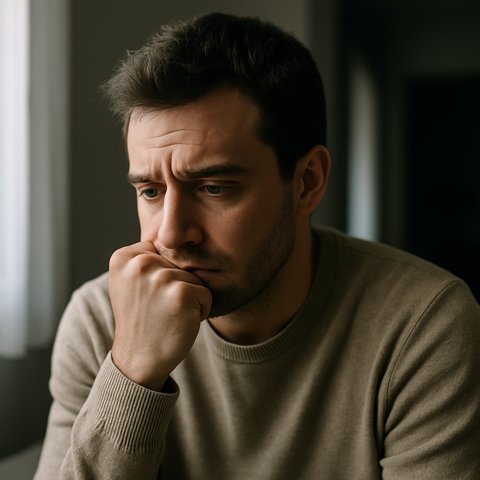 So many poems and novels have been written about love that sometimes it seems every possible word has already been said. But if we set the pathos aside, love is a state in which it feels good to be beside the person you love. There is no need to pretend or hide parts of your personality. When you are accepted as a whole person — with your quirks, mistakes, and individual traits — you feel warmth and safety. And you, in turn, are ready to accept the other person in their uniqueness without demanding that they match some cinematic ideal.
Healthy love has room for joy and lightness. Of course, no one promises a complete absence of difficulties: people argue, go through crises, and sometimes hurt each other with careless words. But the foundation remains strong — respect, willingness to listen, and recognition of the other person’s value. It is a relationship in which two people stand beside each other, not one “above” and the other “below.”
Dependency works differently. At its core is not freedom, but an unmet need. A person feels as though without their partner they become nobody. Every day is accompanied by anxiety: “What if he stops loving me?”, “What if she finds someone better?” There is no peace inside such a bond, only endless swings: euphoria from closeness one moment, panic at the thought of separation the next.
It is important to notice that dependency usually disguises itself as love. From the outside, it may look as though a person is completely devoted, ready to do anything for the relationship, literally living for it. But in reality, this is not love, but fear of being alone, an inability to trust, and the absence of a sense of security. The partner becomes a “lifebuoy” without which it feels as though you will immediately start to drown.
There is another important difference. Love broadens our horizons. A person who feels inspired discovers and becomes interested in new things, moves forward with greater confidence, and feels stronger. In such a relationship, you can dream and make plans, bring ideas to life, and share joy with your partner while feeling confident that you will be understood. Dependency, by contrast, narrows the world. A person stops seeing friends, gives up hobbies, and abandons goals. Their entire life begins to revolve around one person, and it becomes cramped and painful, like living in shackles.
Put simply, love is when “we” exists alongside “I.” There is connection, but there is also individuality. Dependency is when “I” disappears for the sake of “we,” and in the end neither joy nor strength remains in the relationship.
How Dependency Appears in Relationships
 Dependency rarely appears all at once. Usually everything begins beautifully: intense feelings, a desire to spend every minute together, the sense that “this is it — the love of my life.” But gradually, this state stops bringing joy and turns into a painful attachment.
The first thing that stands out is constant anxiety. A person continually needs reassurance that they are loved: words, calls, attention. If the partner is late at work or does not answer a message, panic rises inside. Nothing terrible seems to have happened, yet dark thoughts begin to appear, with an expectation of the worst: “He has gone cold toward me,” “She is going to leave me,” “Maybe he is already tired of me.”
Jealousy and control grow out of this anxiety. A person feels that their partner could leave at any moment and tries to hold on to them by any means: calls, checks, questions, demands for constant closeness. Any personal space is perceived as a threat. As a result, the relationship begins to resemble a cage in which one partner keeps tugging at the other’s arm: “Be only with me, don’t go anywhere, don’t leave me for a single minute.”
Another sign of dependency is losing yourself. Your own interests and desires gradually move into the background. Hobbies are abandoned, meetings with friends stop, even work or study becomes secondary. Only the partner remains at the center of the world. Every reaction from them — a smile, praise, irritation, or dissatisfaction — becomes the main reference point: “If he is happy, then I am good. If she is angry, then I must have done something wrong.”
Over time, self-devaluation also appears. A person in a dependent relationship often thinks: “Who else would love me?”, “I don’t deserve anything better,” “If they leave, I’ll be lost.” Such thoughts bind the person even more tightly to the partner and make an open conversation with an adequate response almost impossible.
From the outside, dependency may look like extraordinary devotion or romantic self-sacrifice, but in reality it is not about love. It is about constant tension, fear, and the feeling that your happiness lies entirely in someone else’s hands.
Why We Confuse Love with Dependency and How to Recognize It
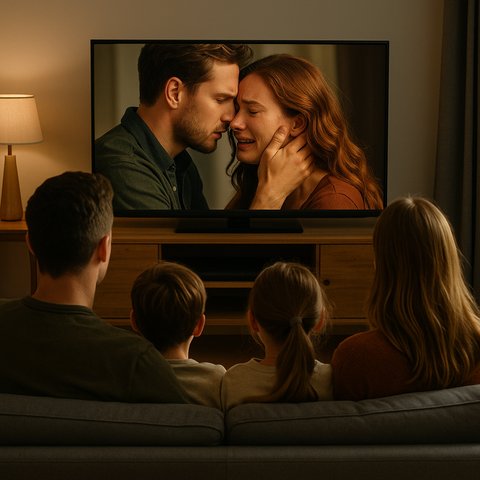 From early childhood, we learn what love is by watching the people around us. If a child grows up in a family where the parents live through constant quarrels and reconciliations, they may absorb a simple formula: love means pain. If the mother or father sacrifices themselves, puts up with the other person, and suffers for the sake of the relationship, the child also begins to see this as normal. Later, in adult life, they may reproduce a similar pattern, because this is what “real love” looks like to them.
Culture has no less influence. In books, films, and songs, love is almost always colored by drama. Happy stories in which partners respect each other and live without unnecessary storms rarely become iconic. But painful passions, jealousy, tragic separations, or self-sacrifice immediately strike a chord. Again and again we hear: “there is no love without jealousy,” “feelings are tested through suffering,” “separation is a trial.” These ideas take root in our minds, and we begin to see anxiety and pain as a natural part of relationships.
There is another nuance. People who have been accustomed to instability since childhood often perceive calm and equal relationships as something suspicious, and one might even say... boring. Inside there is a feeling: “Maybe this isn’t love; everything is too simple.” And the person is drawn back to the familiar swings — jealousy, drama, tears. It may be painful, but at least it feels familiar.
That is why distinguishing love from dependency can be difficult. From the outside, the difference seems obvious: one relationship has trust and respect, another has scandals and jealousy. But inside our own story, feelings can overshadow reason. A simple guide can help: what remains after spending time with your partner? If it is mainly calm, confidence, a sense of warmth, and the feeling that you can be yourself beside them, that is love. If what remains more often is anxiety, tension, and fear of loss, then dependency is playing a strong role in the relationship.
Love fills us and makes us stronger. Dependency, by contrast, drains our strength and narrows life down to fear and control. And if you look honestly at your feelings and discover that there is less joy than anxiety, that is an important signal: perhaps the issue is not love, but the fact that the relationship has become dependent.
What to Do If You Recognize Dependency
 Recognizing dependency is already half the battle. It may sound simple, but in reality it is one of the hardest steps. We are used to making excuses for our partner and turning a blind eye to our own feelings. But as long as we convince ourselves that these are merely “the difficulties of love,” we remain trapped. Freedom begins at the moment when we become honest with ourselves: “This is hard for me. I think I depend on this relationship.”
Next, it is important to gradually regain solid ground under your feet. Dependency causes life to narrow down to one person. To leave this closed circle, you need to bring different sources of support back into your life. It might be interesting work, an engaging hobby, a desire for sporting achievement, great friends, or even small habits that simply bring joy. Anything that reminds you: I have my own life and my own values outside this relationship.
The next step is to learn to understand and respect your own boundaries. In dependent relationships, “no” often feels like a frightening word. A person agrees to things they dislike simply to avoid losing closeness. But genuine closeness does not collapse because of an honest refusal; on the contrary, it becomes stronger. Try saying once: “I can’t today,” “It is important for me to spend some time alone,” “This doesn’t work for me.” Perhaps the world will not collapse afterward. These are all small steps, but they are remarkably effective at restoring a sense of inner freedom.
Sometimes it is difficult to cope on your own. Old habits can be very strong: childhood experience, patterns absorbed from the surrounding culture, and our own various fears. At such moments, the help of a psychotherapist can be invaluable. Talking with a specialist makes it possible to sort things out: to understand where the dependency came from, what feeds it, and how to gradually leave this trap. It is not a quick process, but it offers a chance to build new, healthier relationships — without constant fear and pain.
The main thing to remember is that leaving dependency does not mean the end of love. On the contrary, it is a path toward learning to love differently — not from fear of losing someone, but from the desire to be together.
Love should not be torment. It is not about constant suffering, control, and fear of loss, but about feeling good and warm beside another person. Genuine closeness does not take us away from ourselves; on the contrary, it makes us stronger, opens up new possibilities, and creates the sense that the world is wide and beautiful.